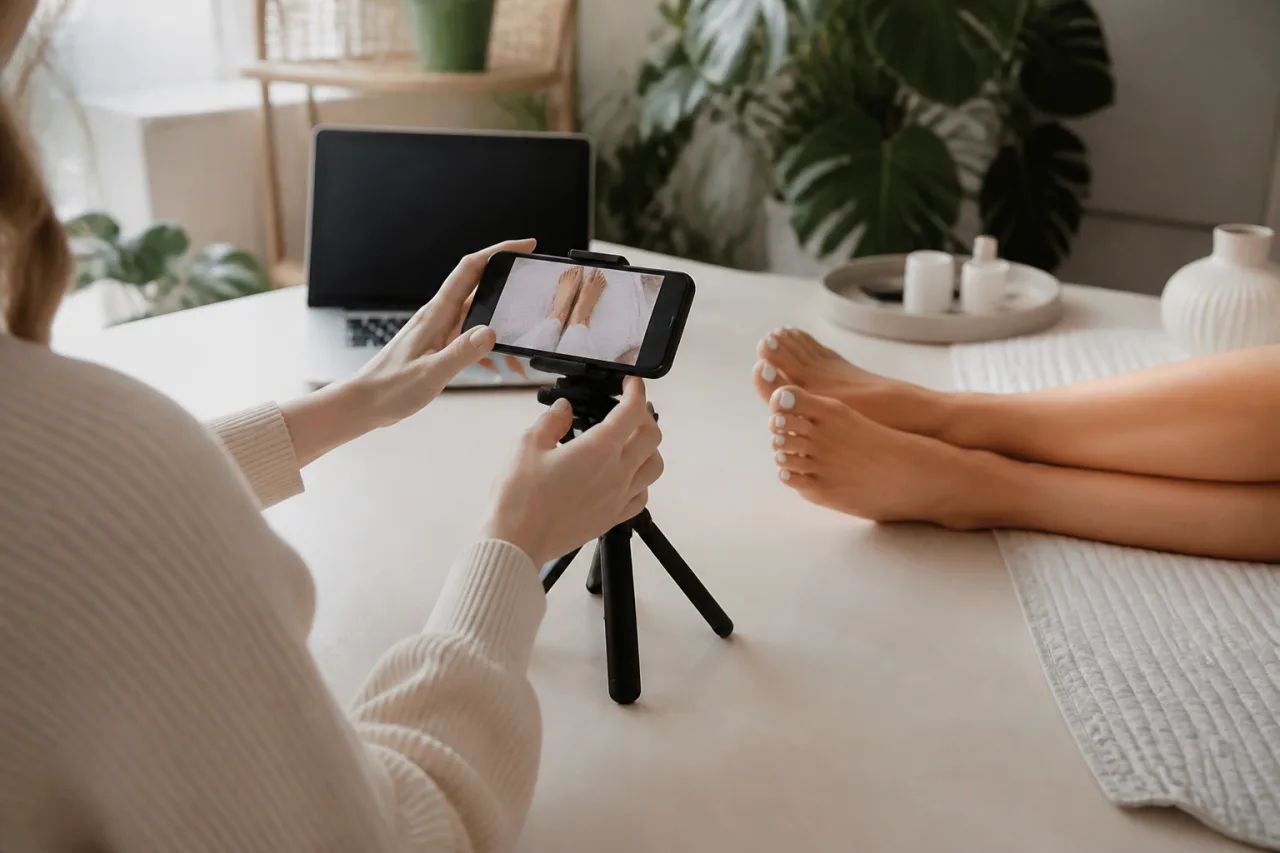
Selling feet pictures still works in 2026, but the easy-money pitch doesn’t. Buyers are out there, yet an empty profile and three rushed phone shots won’t generate sales on their own. The platform you choose affects who finds you, what you pay, how you’re paid and how much privacy you can maintain.
This guide compares dedicated marketplaces with subscription sites, stock-photo agencies and self-hosted stores. You’ll learn how to judge fees, buyer intent and payout options, then build a credible profile, price coherent photo sets and promote them without spamming strangers.
You must be at least 18 to sell. And while you can stay anonymous to buyers, legitimate platforms may privately verify your identity for age and payment checks. We’ll cover that distinction, plus scams, content theft and the privacy steps worth taking before your first upload.
Is Selling Feet Pictures Still Worth It in 2026?
Buyers still pay for well-presented foot content, so the market hasn’t disappeared. But it’s not effortless passive income, and uploading three phone photos won’t automatically produce sales. Expect to spend time creating sets, writing listings, answering messages and keeping your profile active.
It can be worth doing if you enjoy the creative side, can protect your boundaries and don’t mind treating it like a small online business. If you need guaranteed money by next week, this isn’t a reliable option. Sales may be uneven, especially while your account has little content or no buyer history.
What actually affects your earnings?
Photo quality matters, but expensive equipment doesn’t. Bright, sharp images with intentional framing usually look more valuable than dim bedroom snapshots. A clean phone camera and good window light can be enough. Buyers also tend to understand coherent sets—such as 10 coordinated pedicure photos—more easily than a folder of unrelated images.
Your niche influences demand and competition. General pedicure content appeals to a broad audience, while more specific themes may attract fewer but more interested buyers. The better approach is to test a few styles and watch what gets views, messages and repeat purchases rather than assuming one “popular” niche guarantees results.
Consistency keeps a storefront from looking abandoned. You don’t need to upload every day, but publishing on a predictable schedule helps. One polished set each week is more sustainable than posting 30 images on Monday and disappearing for two months.
Pricing has to match the offer. A basic non-exclusive set shouldn’t be priced like a detailed custom request that takes an hour to plan and shoot. Price too high without an established catalog and buyers may hesitate; price too low and you can end up doing fiddly work that barely covers your time and platform costs.
Response time also affects conversions. A buyer asking a reasonable question may move on if the reply arrives four days later. You don’t need to be permanently online. State a realistic response window—such as within 24 hours—and stick to it.
Anonymous to buyers doesn’t mean unverified
You must be at least 18 years old to sell this type of content. Don’t use someone else’s identification, and don’t include another person in a photo unless they’re an adult, have consented and meet the platform’s verification requirements.
A legitimate marketplace may privately request legal identification, a selfie or payout details to confirm your age and identity. That’s different from your public profile. Buyers can see a stage name and non-identifying profile while the platform securely holds the information required for verification, fraud prevention and payments.
So, is it still worth it? Potentially—if you approach it with realistic expectations. The sellers most likely to stick with it are those prepared to produce clear, distinctive content, communicate professionally and improve based on actual buyer interest rather than viral income stories.
The Best Places to Sell Feet Pictures at a Glance
Here’s the quick-read version before we get into the slower platform-by-platform breakdown. Don’t treat this table as fixed pricing advice: seller fees, payout methods, adult-content rules and verification requirements change often, so check each platform’s current terms immediately before publication or signup.
| Platform | Audience type | Discoverability | Seller fees or subscriptions | Payout options | Custom orders | Public anonymity | Promotion required |
|---|---|---|---|---|---|---|---|
| Feetpik | Feet-picture buyers looking specifically for this category | Good, because the marketplace is niche-focused | Check current seller pricing; dedicated marketplaces may use commissions, plans or listing fees | Platform-dependent; verify supported countries and payout timing | Usually a strong fit for requests, bundles and buyer messaging | Good publicly if you use a seller name; private verification may still be required | Low to medium if your listings are polished |
| FeetFinder | Dedicated foot-content buyers | Good, but competitive | Often associated with seller plans and/or platform fees; confirm current costs | Varies by region and account status | Yes, commonly used for custom requests | Good publicly; identity checks may apply | Medium |
| FunWithFeet | Niche foot-content shoppers | Moderate; smaller audience than the biggest platforms | Typically plan- or listing-based; check before joining | Platform-dependent | Yes, depending on buyer messaging tools | Good publicly with a separate profile | Medium |
| Feetify | Foot-content buyers and sellers | Moderate; depends heavily on profile activity | May use membership or premium features; verify current model | Check current payout setup and minimums | Possible, depending on how buyers contact you | Good publicly, with the usual verification caveat | Medium to high |
| OnlyFans | Subscription fans; not feet-specific | Weak inside the platform | Commonly commission-based; confirm current percentage and rules | Platform payouts, availability varies by country | Yes, through messages and paid content | Decent publicly, but creator verification is required | High |
| Fansly | Subscription fans and adult-friendly creator audiences | Better discovery than some subscription platforms, but still audience-led | Usually commission-based; check current terms | Platform payouts, country restrictions may apply | Yes, subscriptions, tips and messages can support customs | Decent publicly; legal identity checks still apply | Medium to high |
| ManyVids | Adult marketplace buyers, including fetish shoppers | Moderate to good within adult categories | Commission and feature fees can vary by product type | Platform payout methods vary by location | Yes, often suited to custom adult content | Good publicly with a stage name | Medium |
| Foap | Brands and stock-photo buyers | Search-based, but not fetish-focused | Typically revenue-share based; confirm current split | Usually mainstream payout rails | Limited; more useful for missions and commercial briefs | Moderate; photographer identity may be visible or required | Low to medium, but sales are less targeted |
| Major stock-photo agencies | Commercial buyers needing lifestyle, beauty, wellness or footwear images | Strong search engines, very crowded libraries | Royalty percentages vary widely by agency and license type | Agency payouts, often with minimum thresholds | Rare; mostly pre-shot licensed images | Limited to moderate; contributor details and releases matter | Low after upload, but volume and keywording matter |
| Self-hosted store | Your own audience | None unless you build traffic | Hosting, domain, payment processor and store fees | Processor-dependent; many mainstream processors restrict adult or fetish sales | Yes, if you build the workflow | Strong publicly if set up carefully, but billing and domain records need attention | Very high |
The short version: dedicated feet marketplaces give you the most relevant buyers from day one. Subscription platforms work best if you already know how to bring traffic. Stock sites are better for clean commercial foot photography, not private buyer requests. A self-hosted store gives the most control, but honestly, it’s also the most work.
Dedicated Feet-Picture Marketplaces
Dedicated marketplaces put your listings in front of people already searching for foot content. That’s their biggest advantage. The trade-off is direct competition: buyers can compare dozens of profiles, prices and styles without leaving the site.
Feetpik
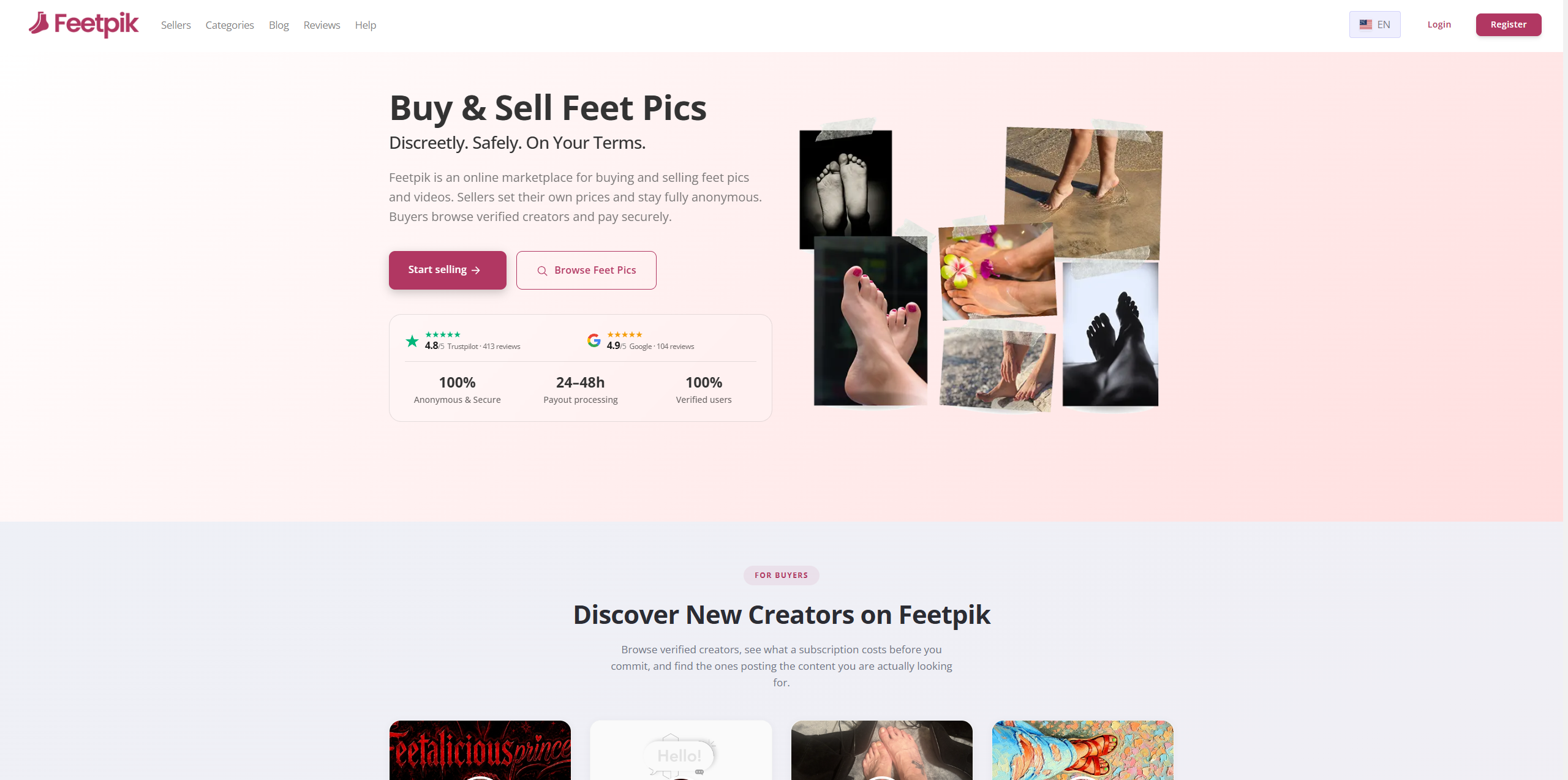
Feetpik is aimed squarely at foot-content buyers and sellers. Registration involves creating a seller account and completing the platform’s current identity and age-verification steps. Your legal details may be checked privately, while your storefront can use a separate public username.
Sellers can build a profile, publish picture sets and communicate with potential customers through the platform. Payments are handled on-site rather than through screenshots or informal transfers; check the current seller fees, payout methods, minimum withdrawal and country availability before committing.
Buyer intent is generally strong because visitors haven’t arrived looking for unrelated creator content. Still, Feetpik isn’t a magic traffic source. A thin profile with two average photos may disappear beside established sellers. It best suits beginners and privacy-conscious sellers who want a niche storefront, relevant shoppers and platform-managed transactions without building a standalone shop.
FeetFinder
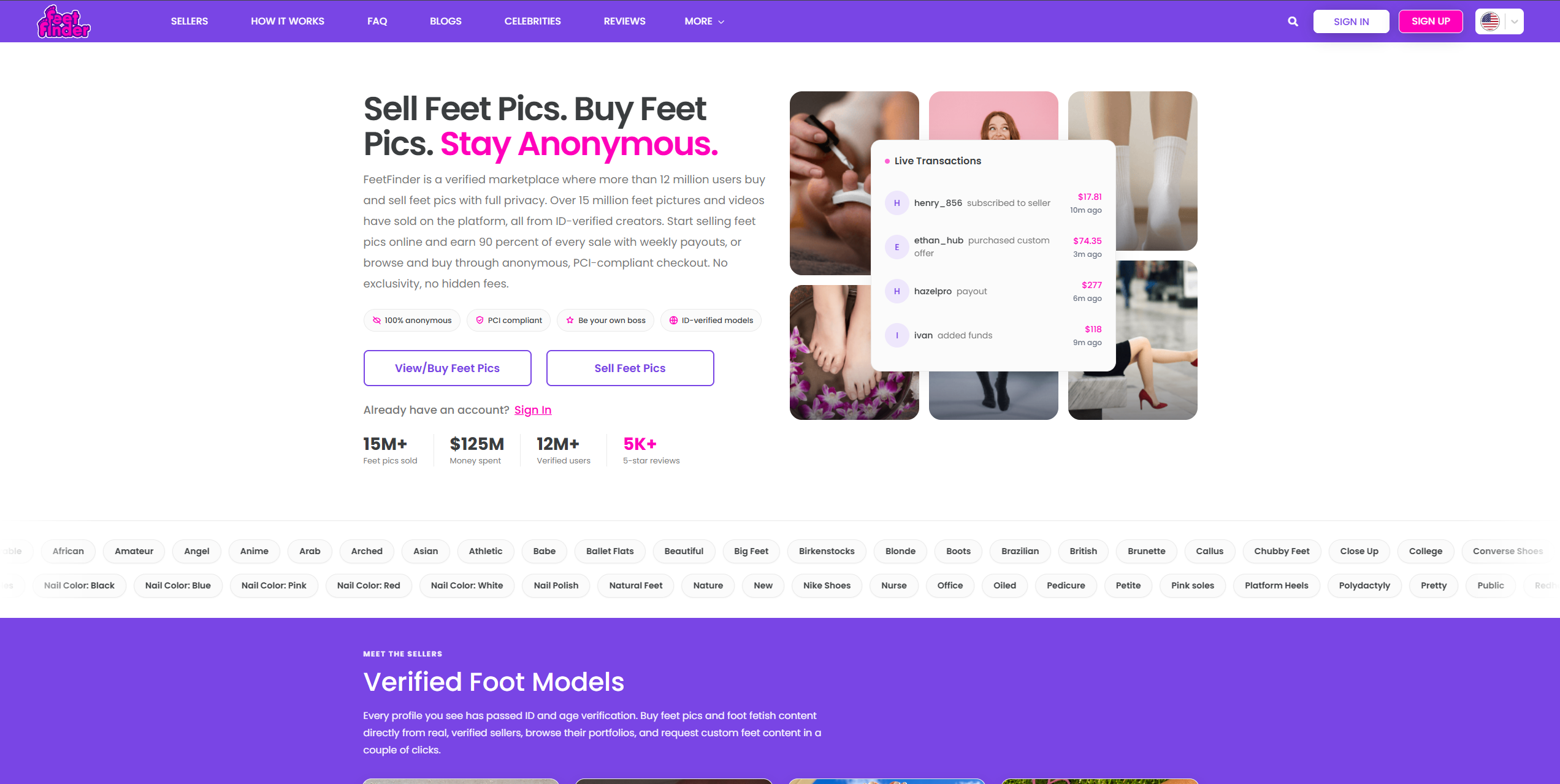
FeetFinder has broad name recognition and a large catalog. Sellers create an account, submit age and identity verification, choose the applicable seller plan, then add albums, profile details and pricing. It supports direct messaging and custom-content discussions, with buyer payments and seller payouts processed through the platform.
The audience is highly targeted, but competition is heavy and seller charges can reduce the value of small sales. Its size can also make the browsing experience feel crowded. FeetFinder suits sellers prepared to upload regularly, answer messages promptly and test several niches rather than relying on one generic gallery.
FunWithFeet
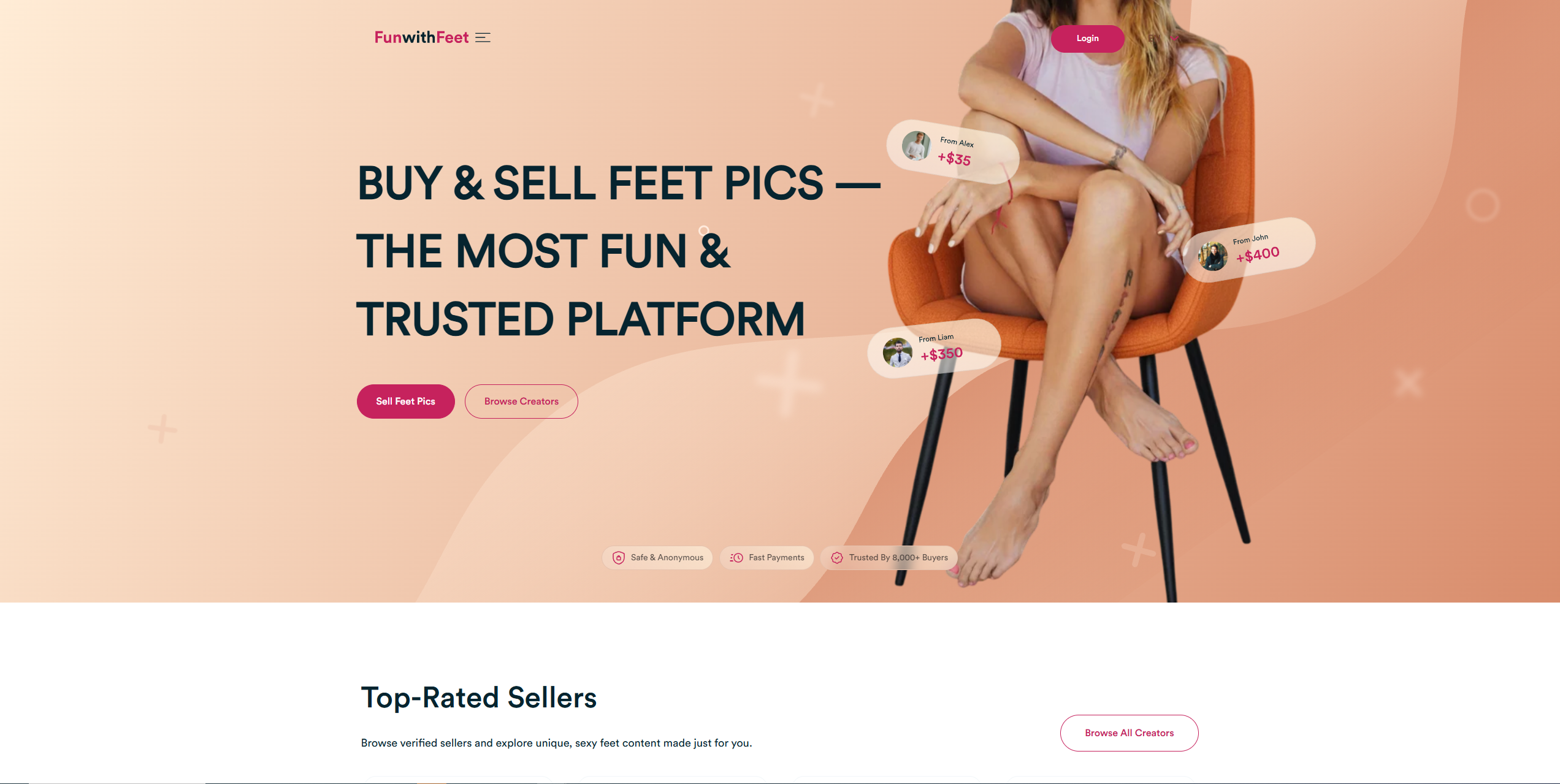
FunWithFeet uses a marketplace-style setup: register, complete the required checks, create a profile and list collections for sale. Buyers can browse categories and contact sellers, while purchases go through the site’s payment system rather than being confirmed by a buyer’s supposed receipt.
Its simpler setup may appeal to casual sellers, although storefront customization and discovery tools can feel lighter than on larger platforms. Review its current membership cost, moderation process, payout schedule and refund rules first. It’s a reasonable fit for someone selling occasional themed bundles who doesn’t need an elaborate subscription business.
Feetify and Smaller Niche Marketplaces
Feetify combines profiles, content discovery and direct interaction, with free and paid account features that may change over time. Confirm exactly which verification, messaging, selling and withdrawal tools are available in your country; don’t assume every visible profile feature includes protected checkout.
Smaller marketplaces can offer less competition and more profile visibility, but they may also have fewer active buyers, slower support and limited payout options. Before uploading, test the signup flow, read the seller agreement, locate the company’s contact details and verify that payment stays on-platform. These sites suit experimental sellers willing to start with a small catalog—not anyone who needs predictable traffic or fast payouts.
Other Platforms That Can Work—and Their Trade-Offs
Broader creator platforms can handle subscriptions, digital sales or licensing, but they don’t necessarily put your work in front of people actively shopping for feet pictures. In most cases, the tools are useful; the built-in buyer intent is weaker. Expect to do more promotion yourself.
OnlyFans and Fansly
OnlyFans and Fansly make sense if you want to build a subscription-based page rather than sell occasional photo sets. You can post recurring content, offer paid messages and keep regular subscribers in one place. Fansly also has internal discovery features, though neither platform should be treated like a dedicated feet marketplace.
The biggest hurdle is traffic. A polished page with 30 posts can still sit unnoticed unless you already have followers or promote through permitted channels. You’ll also need enough material to justify a monthly subscription; one new set every few weeks usually won’t feel like much value.
Read the current acceptable-use, moderation and promotion rules before opening an account. Policies covering fetish content, public previews, direct messages and external links can change, and what’s allowed behind a paywall may not be allowed in a profile banner or promotional post.
ManyVids and Similar Creator Marketplaces
ManyVids and comparable adult creator marketplaces are built around clips, creator stores and paid fan interactions. They may suit sellers who plan to expand beyond still photos into short videos, themed bundles or made-to-order content.
There’s an adult audience on these sites, but feet content competes with hundreds of other categories. Good titles and regular uploads help, yet you may still need outside promotion to get meaningful visibility. Check what each platform permits in custom requests, messaging and previews, and never assume that one adult platform’s rules match another’s.
Foap, Adobe Stock and Shutterstock
Stock-photo platforms serve designers, publishers and advertisers—not fetish buyers. They can work for clean, commercial images such as feet in sandals, spa treatments, running shoes or a pedicure at home. The buyer generally licenses an image for a project rather than contacting you for a custom set.
Acceptance standards are stricter than many beginners expect. Images need sharp focus, controlled lighting, accurate keywords and any required model or property releases. Repetitive close-ups may be rejected for limited commercial value. Don’t upload fetish-oriented captions or imagery without first confirming the agency’s current content rules.
Your Own Website and Social Media
A self-hosted site gives you control over branding, pricing and your customer list. It also leaves you responsible for hosting, age controls, taxes, payment processing, delivery and customer support. Payment providers may restrict adult or fetish-related sales even when the website host allows them, so verify both policies before building the store.
Social media is better treated as a discovery channel than a checkout. Keep previews within each network’s rules, avoid unsolicited messages and direct interested adults to an approved sales page. Reach can disappear after an account restriction, which is why relying on one social profile is a fragile setup.
How to Choose the Right Selling Platform
There isn’t one platform that wins for every seller. The better choice is the one that fits your budget, location, content style and tolerance for promotion. Before joining, score each option on the factors below rather than choosing solely because it has the lowest advertised fee.
Calculate the Real Cost of Selling
Start with a sample month. If you expect $300 in sales, subtract membership charges, platform commission, payment-processing fees, withdrawal fees and any currency-conversion costs. A $10 monthly subscription may be cheaper than a 20% commission—or a waste of money if you make no sales.
Then consider what you’re getting for that cost. A dedicated marketplace may bring buyers already searching for feet pictures, but you’ll compete with many similar profiles. A general creator platform may offer subscriptions and polished publishing tools, yet require several hours a week of social posting just to attract visitors.
Check how the platform handles disputes, too. Does it review chargebacks, keep delivery records and offer seller support, or can a reversed payment simply be deducted from your balance? No policy removes all risk, but on-platform payments and documented delivery are generally safer than informal arrangements.
Check Payouts Before Building a Storefront
Confirm that sellers in your country can actually withdraw earnings. Don’t assume that accepting your registration means supporting your bank account. Check available payout methods, minimum withdrawal amounts, processing times, identity requirements and supported currencies.
For example, a $50 minimum payout can trap earnings if you only make occasional sales. Conversion and intermediary-bank fees can also turn a seemingly good commission rate into a poor deal. Read the current payout documentation and contact support if your country isn’t listed clearly.
Also inspect privacy and communication controls. Look for hidden legal names, blocked words, user blocking, reporting tools and the ability to keep messages on-platform. If buyers can send unrestricted attachments or repeatedly contact you after being blocked, think carefully before using the site for custom requests.
Match the Platform to Your Sales Style
Read the content rules line by line. Some services permit adult-oriented foot content; others accept only commercial, non-fetish photography. Rules may also restrict captions, previews, external links, nudity, worn items or direct promotion. A platform isn’t useful if your normal catalog risks removal.
- Beginners: Try a reputable dedicated marketplace such as Feetpik, where buyer intent, storefront tools and payments are in one place.
- Privacy-focused sellers: Prioritize public pseudonyms, controlled messaging, private verification and payouts that don’t expose personal details to buyers.
- Subscription creators: Choose OnlyFans, Fansly or a similar service if you can publish regularly and already have traffic—or time to build it.
- Custom-order specialists: Favor platforms with order terms, upfront payment, message controls and clear delivery records.
- Commercial photographers: Use stock agencies for brand-safe images such as footwear, wellness and lifestyle shots, provided you can meet their release and technical requirements.
Set Up an Anonymous, Credible Seller Profile
Separate Your Seller Identity
Create a new email address used only for selling, platform notices and payout communication. Don’t build it from your real name, birth year, workplace or a nickname connected to your personal accounts. Something plain, such as studiojuniper@..., looks far more professional than a random string of numbers.
Choose a unique seller username, then search it on Google and major social platforms before committing. If that name already links to your old gaming account or personal Pinterest boards, pick another. Avoid recycling profile text, usernames or photos from accounts friends and family follow.
Use a neutral profile image that fits your brand without identifying you. A simple logo, cropped product-style foot photo or graphic in two consistent colors works well. Skip face photos and images taken inside a recognizable home, workplace or neighborhood.
Turn on two-factor authentication immediately, preferably through an authenticator app. Keep seller files in a separate cloud-storage account rather than mixing them with family photos, personal documents or automatic phone backups. Clear folder names such as Previews, Delivered and Custom Orders also make daily account management less chaotic.
Write Boundaries Before Buyers Contact You
Decide what you offer before opening your inbox. Write down the themes you’ll shoot, your normal turnaround time, whether you accept custom requests and what you won’t create. It’s easier to decline an uncomfortable request when the rule already exists.
Put the main points in a short bio. For example:
Natural-light foot photography with polished, sock and shoe-themed sets. New uploads weekly; custom orders delivered within 3–5 days after payment. No face, live calls, meetups or off-platform contact.
That bio gives buyers useful information without sounding cold. Don’t add defensive warnings or a long list of bad past experiences. State the boundary once, politely and clearly, then apply it consistently.
Build Trust Without Revealing Personal Details
An anonymous profile shouldn’t feel empty. Complete every relevant field, use consistent spelling and visual branding, and give realistic response hours. “Replies within 24 hours, Monday to Friday” is more credible than promising instant availability.
You can also mention broad, non-identifying details that help buyers understand your work: your photo style, typical set size, nail-color options or the kinds of footwear available. There’s no need to share your real first name, exact location, employer, relationship status or personal social accounts.
Public anonymity doesn’t mean the platform knows nothing about you. A legitimate marketplace may privately request legal identification, date of birth, address or tax and banking details to confirm you’re at least 18, prevent fraud and process payouts. Buyers shouldn’t see that information, but check the platform’s privacy policy to learn how it’s stored and who can access it before submitting documents.
Create Photo Sets Buyers Can Understand and Price
Plan Sets Instead of Taking Random Photos
A buyer should know exactly what they’re getting before opening a listing. Ten unrelated photos from different days feel like leftovers; eight images from one polished session feel like a product.
Start with soft window light from the side. If daylight is unreliable, use one daylight-balanced lamp pointed through a white curtain or bounced off a wall. Avoid mixing yellow room lights with blue daylight, and check that the toes, arches and skin texture are sharply focused before shooting the full set.
Keep backgrounds clean: a plain sheet, wooden floor, neutral rug or uncluttered patio works. Capture a useful sequence rather than tiny variations of the same frame. For example:
- Two full-foot views
- Two close-ups of the pedicure or styling
- One sole view and one arch angle
- Two side or lifestyle angles
Popular brand-safe concepts include fresh pedicures, patterned socks, heels or sneakers, seasonal colors, soles, arches and outdoor lifestyle shots on grass, sand or decking. Build each set around one clear idea. “Red Pedicure With Black Heels” is easier to browse and price than “Friday Photos.”
Use Clear Titles, Tags and Previews
Write titles for buyers, not for yourself. Include the theme, key color or footwear, setting and image count: “12-Photo Autumn Socks and Boots Set” tells far more than “Cozy Collection.”
Tags should describe what’s genuinely visible, such as pink pedicure, bare feet, arches, striped socks, sneakers, outdoor or summer. Don’t cram unrelated terms into a listing. Poor tagging may attract clicks, but it also creates disappointed buyers.
Choose two or three representative previews showing the overall quality and variety. Don’t use the strongest image as the only preview if the rest look noticeably different. Also state the number of files, orientation, approximate resolution and whether the set has been sold before.
Price Ready-Made Sets and Custom Requests
There’s no universal rate, but beginners need a workable starting point. An individual ready-made image might be listed around $3–$8, while a coherent set of 8–12 images could start around $15–$35. Bundles should cost less per image without becoming a giveaway.
A subscription might sit around $10–$25 per month if you can publish consistently and explain what members receive—for example, two new sets each month. Don’t promise weekly uploads if your schedule only allows one shoot every few weeks.
Custom requests should cost more because they involve planning, communication and reshooting risk. A basic non-exclusive custom set might begin at $30–$60, then rise for specific props, detailed styling, fast turnaround or difficult locations. Charge substantially more for exclusivity, since you’re giving up future sales of that material.
Finally, calculate backward from your actual payout. If a platform takes fees, a $20 sale won’t put $20 in your pocket. Price for shooting time, editing, setup costs, exclusivity and the platform’s current commission—not simply what another seller charges.
How to Get Your First Sales Without Spamming
Your first sales usually come from looking established, being easy to find and replying like a professional. Promotion helps, but sending unsolicited messages to strangers rarely does. It mostly gets accounts muted or banned.
Launch With a Small but Complete Catalog
Don’t promote an empty storefront. Publish six to ten polished sets first, with enough variety for someone to understand your style. For example, you might launch with two pedicure sets, a socks set, a shoe-focused set, an outdoor set and a simple soles or arches set.
Complete every searchable profile field the platform offers, including categories, tags, listing titles, descriptions, availability and custom-order status. Buyers can’t find “red pedicure in sandals” if your listing is simply called “New pics.” Specific titles beat clever ones.
Then choose a posting rhythm you can maintain. Two new sets per week for a month looks better than uploading 15 sets in one night and disappearing. State a realistic response window in your bio—“Replies within 12 hours” or “I check messages each evening”—and stick to it.
Create a pinned catalog or menu too. Keep it short: available themes, bundle sizes, starting prices, custom turnaround and firm boundaries. Update it whenever an option sells out or your availability changes.
Promote Where Self-Promotion Is Allowed
Use communities that explicitly permit seller posts, and read the rules before sharing anything. Some allow promotion only on certain days; others require a verified flair, limit links or ban repeated captions. If the rules say one promotional post every seven days, posting daily isn’t persistence—it’s spam.
Make each post useful enough to stand on its own. Share one strong preview, identify the theme and direct interested buyers to your storefront or pinned menu. Don’t tag unrelated users, hijack another seller’s post or copy-paste the same pitch into dozens of comment sections.
Track which permitted communities actually send profile visits or inquiries. After three or four weeks, drop channels that consume time without producing interest and focus on the one or two that fit your work.
Handle Custom Requests Professionally
For a custom inquiry, confirm the requested theme, number of images, delivery date, price and allowed usage before accepting. If the request crosses a boundary, decline it plainly. You don’t owe a long explanation, and a vague “maybe” only invites more negotiation.
After delivering a first order, send one low-pressure message: “Thanks for your purchase. If you’d like another set in this style later, it’s listed in my menu.” That’s enough. Don’t chase the buyer for a review, send repeated offers or assume they want private conversation.
Keep a note of what returning buyers purchased so you can suggest a genuinely relevant new set later. A thoughtful message tied to their previous choice feels like service; a daily sales pitch feels like pressure.
Protect Your Privacy, Money and Content
Remove Location and Identity Clues
Before uploading, strip EXIF metadata, especially GPS coordinates, device details and timestamps. Turning off location tagging in your camera settings helps, but don’t rely on that alone. Export a clean copy with metadata removed, then check the finished file with an EXIF viewer before posting.
Inspect the actual image too. Mirrors, windows and shiny furniture can reveal your face or room layout. Crop out mail, family photos, work badges, street signs, distinctive tattoos and anything showing where you live. Use a separate seller email and a unique password of at least 16 characters, stored in a password manager, with two-factor authentication enabled.
Keep Payments and Messages on the Platform
A buyer asking to move immediately to Telegram, WhatsApp or email is a warning sign. So are requests for a “verification fee,” gift cards, crypto deposits or money to release a supposedly pending payment. Legitimate buyers don’t need you to pay them first.
Never treat an emailed receipt or payment screenshot as proof. Screenshots take seconds to fake. Confirm the order inside the platform dashboard and wait until its status shows as paid before sending unwatermarked files.
Keep order details, custom requests, delivery messages and payment confirmations in one place. Those records may help if a buyer claims non-delivery or files a chargeback. Check how each platform handles disputes, refunds and seller protection; some deduct chargebacks from your balance even after content has been delivered.
Limit Theft With Previews and Watermarks
Assume any public preview can be copied. Upload lower-resolution samples, avoid showing the entire set and place a visible watermark across part of the foot or background—not neatly in a corner where it can be cropped away. Use your seller username rather than your legal name.
Run occasional reverse-image searches with Google Lens, Bing Visual Search or TinEye. If you find reposted work, save the page URL and screenshots before submitting the site’s copyright or takedown form. Watermarks won’t stop every thief, but they make stolen images less useful and ownership easier to demonstrate.
Understand Taxes, Consent and Platform Rules
You must be at least 18 to sell adult-oriented content, and every identifiable person appearing in an image must be an informed, consenting adult. Don’t upload someone else’s feet, even a partner’s, without clear permission. For collaborative shoots, keep dated consent and age-verification records somewhere encrypted and private.
Save payout statements, platform fees, refunds and relevant business expenses throughout the year. Seller income may be taxable even if it’s occasional or paid through an overseas platform. Rules differ by country, so ask a qualified local tax professional what you must report.
This isn’t legal advice, and platform policies can be stricter than local law. Recheck content, custom-order and payout rules regularly, particularly before accepting a request that involves another person, public locations or unusual props.
Common Mistakes That Cost New Sellers Time or Money
Most expensive beginner mistakes happen before a genuine sale takes place. A little skepticism—and a clear process—will save you from wasted shoots, account suspensions and unpaid work.
Paying People Who Claim They’ll Help You Sell
A buyer shouldn’t need a “verification fee,” gift card or refundable deposit from you. Be equally wary of agents promising guaranteed customers after an upfront payment, especially if they can’t provide a verifiable business identity or written terms. Don’t send money to receive money. Use the platform’s payment system and independently check anyone offering representation.
Leaving the Platform Too Quickly
Someone who immediately pushes you toward Telegram, WhatsApp or private email may be trying to bypass moderation and payment protections. Keep early conversations and transactions on-platform. If you later choose another channel, use your seller identity—not a personal account connected to your phone number, workplace or family.
Check backgrounds before sending previews, too. Mail on a counter, a recognizable window view, car registration plates and reflections in mirrors can reveal more than your face. Create a quick pre-upload routine: zoom in, inspect reflections and remove anything identifying.
Launching an Empty or Unclear Storefront
Promotion won’t do much if visitors arrive to find one profile photo and no products. Publish at least three to five coherent sets first, then start directing people to your page. Buyers should be able to compare styles, prices and themes without messaging you for basic information.
Vague titles such as “Cute Feet Pics” don’t help. State what’s included: “12 high-resolution barefoot sole photos, red pedicure, indoor window light.” Add the file count, general angles, delivery method, exclusions and whether the content is pre-made or custom.
Using Work That Isn’t Yours
Copying another seller’s photos—even temporarily—can trigger copyright complaints, destroy buyer trust and get your account removed. Use only images you created and have the right to sell. Inspiration is fine; duplicating someone’s photos, watermark or listing text isn’t.
Pricing Customs Like Ready-Made Sets
A $10 bundle already photographed isn’t equivalent to a $10 custom request requiring a new pedicure, specific props and 40 minutes of shooting. Quote customs only after confirming the brief. Charge for preparation, shooting, editing, platform fees, rush delivery and exclusivity, then collect confirmed payment before starting.
Making Promises You Can’t Support
Don’t advertise “instant income” or guaranteed earnings to attract followers, referrals or other sellers. Results vary, and exaggerated claims make a legitimate profile look scammy. Describe the content and service you actually provide instead.
Skipping Rules and Assuming Every Message Is a Sale
Read the platform’s current rules before posting, including restrictions on captions, links, solicitation and custom content. “I didn’t know” rarely reverses a suspension.
Finally, an inquiry isn’t an order. Don’t buy props, reserve hours or deliver unwatermarked files because someone says they’re interested. Confirm the exact request, price, deadline and cleared on-platform payment first; otherwise, keep the conversation in the quote stage.
Your 2026 Feet-Picture Selling Checklist
Save this checklist somewhere private and run through it before launch, then again before every sale. Five careful minutes can prevent weeks of payment disputes, privacy worries or messy records.
Before You Create an Account
- Confirm you’re eligible. You must be at least 18. Also check any local restrictions that apply to selling adult-oriented content or operating as a self-employed creator.
- Research the platform’s current rules. Read its content policy, verification requirements, privacy terms, dispute process and rules for custom requests. Don’t rely on a review written two years ago.
- Check the real cost. Note signup charges, subscriptions, sales commissions, withdrawal fees and minimum payout thresholds. Confirm that a supported payout method works in your country.
- Separate the account from your personal life. Use a new email address, seller username and dedicated storage folder. Avoid usernames, profile photos or recovery details that customers could connect to your everyday accounts.
- Secure everything. Create a unique password and switch on two-factor authentication. Save backup codes offline rather than in the same inbox used for the account.
- Write down your boundaries. Decide which themes, messages and custom requests you’ll accept. Set a realistic turnaround time and know when you’ll decline an order without negotiating.
Before You Publish a Listing
- Remove hidden metadata. Export clean copies and check that location, device, date and creator information aren’t embedded in the files.
- Protect the previews. Upload lower-resolution samples with a visible but unobtrusive watermark. Don’t reveal every full-size image from the paid set.
- Price the complete job. Include shooting, editing, messaging time, platform fees and any exclusivity requested. Customs should usually cost more than ready-made sets.
- Describe exactly what’s included. State the image count, theme, orientation, resolution, file type and delivery window. Mention whether the listing is pre-made, exclusive or available to multiple buyers.
- Proofread before publishing. Check that the title matches the actual set and that no background detail exposes a name, address, workplace or recognizable location.
Before You Deliver an Order
- Confirm payment inside the platform. An inquiry, promise, email receipt or screenshot isn’t payment. Wait until the order appears as paid in your seller dashboard.
- Recheck the order details. Match the agreed quantity, format, theme and delivery date. Get approval before doing extra custom work that wasn’t included in the price.
- Deliver through the approved channel. Use the platform’s order system when available, and keep the original files in private storage.
- Keep a delivery record. Save the order number, date, amount, agreed request and proof of upload or message delivery. This matters if a dispute appears later.
- Track the money. Record gross sales, platform fees, refunds and relevant business expenses in a simple spreadsheet. Set aside part of each payout for taxes and check the reporting rules where you live.
So, Where Should You Start?
If you’re completely new to selling feet pictures, start with a reputable dedicated marketplace such as Feetpik. You’ll be listing in front of people already looking for this type of content, rather than trying to build buyer interest from scratch on a general social platform.
That makes a dedicated marketplace the most practical starting point for sellers who want relevant buyers, on-platform payments and a public identity that’s separate from their personal accounts. You’ll still need to complete any private age, identity and payout checks the platform requires, but customers don’t need to know your legal name or follow your everyday social profiles.
Choose the Platform That Matches What You Already Have
Choose Feetpik or another established feet marketplace if you’re a beginner. It’s the clearest fit when you don’t have an audience and would rather spend your time improving listings than constantly directing followers to a sales page. Check the current seller fees, payout availability in your country and content rules before opening an account, since those details can change.
Choose a subscription platform if you already have an engaged audience. This route makes more sense for creators who can reliably send people from an existing social profile, mailing list or community. Subscription sites can support recurring content and closer fan relationships, but an empty profile with no outside traffic rarely sells itself.
Choose a stock-photo agency for non-fetish commercial images. Think bare feet on a bathroom scale, shoes on a hiking trail, a spa treatment or a parent-and-child lifestyle scene—not custom fetish requests. Stock agencies serve designers, publishers and advertisers, so releases, technical quality and commercial usefulness matter more than personal interaction.
Start Smaller Than You Think
Pick one primary platform and give it a fair test before opening accounts everywhere. Launch with a small, polished catalog—perhaps four to six coherent sets with clear covers and descriptions—rather than uploading 50 near-identical shots. A focused storefront is easier to maintain and gives buyers a better first impression.
Keep that test controlled. Use your separate seller identity, stick to your stated boundaries and record the time spent shooting, editing, answering messages and handling orders. After 30 to 60 days, review which listings attracted views, which ones sold, how much you kept after fees and whether the workload felt worthwhile.
If the platform produces qualified inquiries or repeat purchases, improve what’s working before adding another channel. If it doesn’t, change one variable at a time: your thumbnails, set themes, pricing or posting schedule. Moving to five new sites at once won’t tell you what the actual problem was.
Honestly, the best starting platform isn’t the one with the longest feature list. It’s the one that fits your buyers, protects the separation between your public persona and private life, pays you through a process you understand and doesn’t demand more promotion than you can sustain. Start there, build carefully and expand only when the numbers—not impatience—give you a reason.