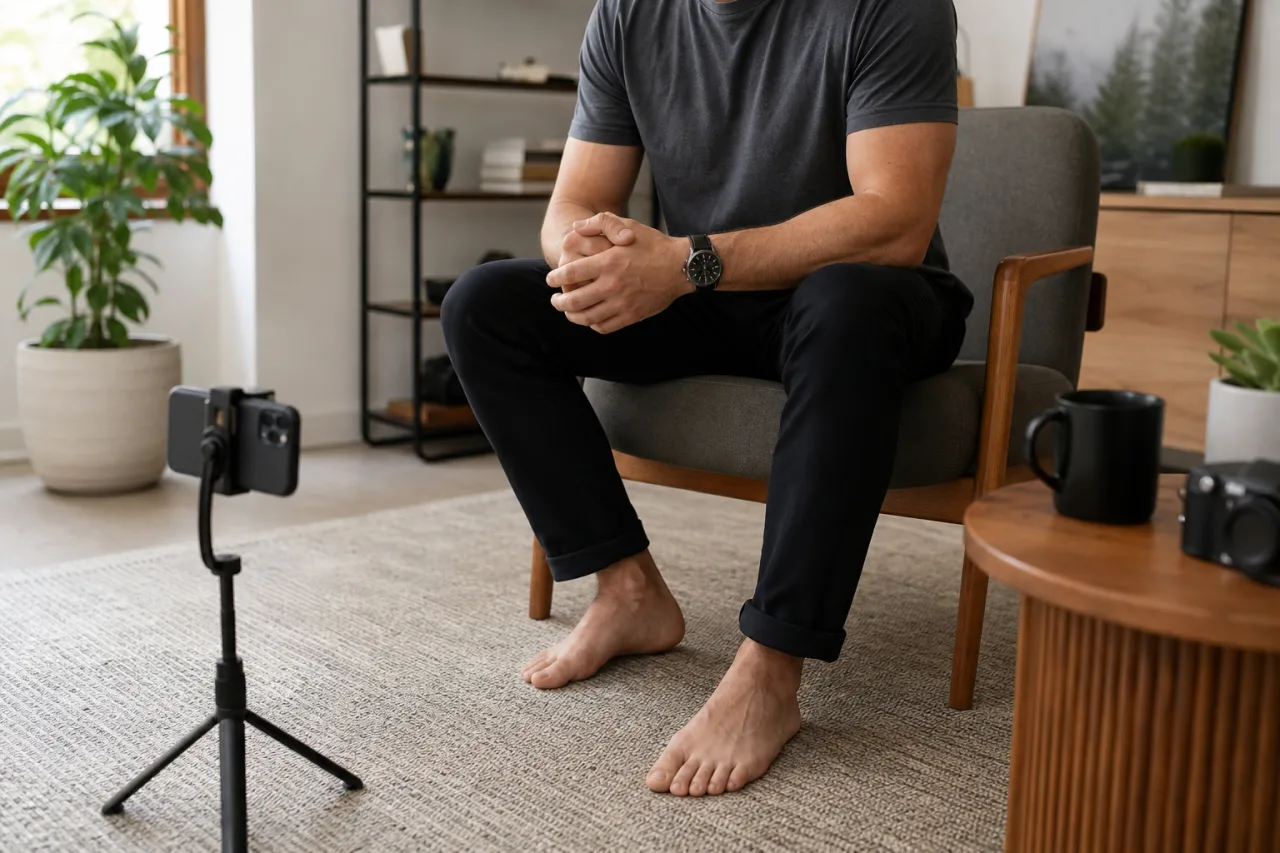
Yes—adult men can legally sell photos of their own feet, subject to local laws and platform rules, and buyers do look for male-focused content. The catch? Uploading three rushed phone shots and waiting for passive income usually won’t work. Demand varies, first sales can take time, and a clear niche—athletic, rugged, groomed, socks or footwear—matters more than simply being male.
This guide shows you how to build a privacy-conscious seller identity on Feetpik, shoot sharp photos with gear you probably own and price sets without undercharging. You’ll also learn how to write clear listings, handle custom requests, spot scams and keep identifying details out of frame. Honestly, it’s not guaranteed money—but with firm boundaries, consistency and professional communication, it’s a real market worth testing.
Yes, Men Can Sell Feet Pics — but Set Realistic Expectations
Yes. Adult men can legally sell photos of their own feet, provided the images follow applicable laws and platform rules. There are buyers specifically looking for male-focused content, so this isn’t a women-only market.
That said, uploading five generic phone photos and waiting for effortless income usually goes nowhere. Sales depend on the style of content, image quality, pricing, profile activity and how professionally you handle inquiries. Some sellers may get interest within days; others can post consistently for several weeks before making a first sale.
Is There Actually Demand for Male Feet Pics?
There is demand, but it’s smaller and more fragmented than the market for female feet content. That isn’t necessarily bad news. A less crowded category can make a clear, memorable profile easier to notice.
The key is giving buyers a reason to choose your photos over dozens of similar listings. “Male feet” is a category, not a complete niche. A profile built around a recognizable look—such as athletic, rugged, neatly groomed or footwear-focused content—sets clearer expectations than a random gallery of bare feet on bedroom carpet.
You also don’t need model-perfect feet. Distinctive features such as a larger shoe size, visible veins, calluses or a naturally hairy look may fit a particular buyer’s preference. Intentional presentation matters more than trying to appeal to everyone.
How Much Can Men Realistically Make?
There’s no reliable average income, and any claim that you’ll make hundreds of dollars immediately should raise an eyebrow. A new seller might earn nothing in the first month, make occasional small sales, or gain traction after building a larger catalog. Results vary too much to treat this as guaranteed rent money.
A better early goal is to test demand over 30 to 60 days. Track which listings receive views, messages and purchases, then produce more of what converts. Don’t judge progress by compliments or vague promises from buyers; only completed sales count.
Think of the work as a small content business, not instant passive income. Consistent lighting, sharp photos, a defined style and prompt, courteous replies will usually matter more than posting constantly. Ten polished, coherent sets can make a stronger impression than 100 rushed images with no obvious theme.
Who Buys Male Feet Pics and What Are They Looking For?
Buyers aren’t one predictable type of person, and it’s not useful to guess their gender or orientation. Some collect male foot photography, some are interested in footwear, and others simply want a specific look they can’t find in generic image sets. Their preferences can be surprisingly precise.
That’s good news for sellers: you don’t need “perfect” feet or explicit content. A clear visual style often matters more than nudity. Plenty of marketable concepts involve trainers, work boots, socks, outdoor settings or everyday grooming.
Popular Male Feet Pic Niches
Athletic themes are a natural fit for many male sellers. Think bare feet beside running shoes, post-workout sock shots, taped ankles or feet on a gym mat. The scene should look intentional rather than like you snapped a random photo after training.
Rugged and natural sets appeal to buyers who prefer calluses, body hair, visible veins or a less polished appearance. At the other end, groomed sets focus on trimmed nails, moisturized skin and clean, close-up compositions. Neither style is automatically better; consistency is what makes the presentation believable.
Other common interests include:
- Larger sizes: Photos that show scale using shoes, furniture or a tape measure.
- Footwear: Loafers, boots, sandals, trainers or formal shoes being worn or removed.
- Socks: White sports socks, dress socks, patterned pairs, ankle socks or worn-in styles.
- Seasonal scenes: Bare feet by a pool, sandy summer shots, autumn leaves or thick socks near a fireplace.
- Character concepts: Builder, runner, office worker, hiker or football fan themes created with simple props.
Custom Requests Versus Ready-Made Sets
Ready-made sets let buyers browse and purchase without a long conversation. A focused set might contain several angles of bare feet after a hike, or a sequence showing boots, socks and then bare feet. These are easier to produce because you control the concept from start to finish.
Custom buyers usually specify details such as pose, sock color, footwear, background, camera angle or a handwritten word included in the frame. Review the full request before agreeing, especially if it requires unusual props or anything outside your boundaries.
You’re always allowed to decline. Non-explicit customs can still feel personal and distinctive: matching a requested color scheme, recreating a seasonal scene or photographing a particular shoe-removal sequence may be exactly what the buyer wants.
Choose a Niche That You Can Sustain
A good niche starts with what you already have, not whatever a buyer happened to request last week. Look at your foot shape, size, hair, arches and natural wear. Then check your wardrobe and the places you can use regularly. Work boots and a gravel driveway support a rugged style; running shoes, sports socks and a local track naturally suit an athletic one.
Comfort matters just as much. If you dislike close-up sole shots or don’t want to wear certain footwear, don’t build your profile around those ideas. A niche you can produce twice a month is far more useful than an elaborate concept you’ll abandon after one shoot.
Turn Ordinary Details Into a Recognizable Style
Choose one primary identity that accounts for roughly 60% to 70% of your posts. It might be “size 12 athletic feet,” “groomed office style” or “rugged outdoors.” This gives buyers a clear reason to follow you and makes planning new sets much easier.
Next, add one or two supporting themes. An athletic profile could rotate between post-workout barefoot shots, worn sports socks and sneaker-focused sets. A polished profile might include dress socks and relaxed weekend grooming. The subjects change, but the overall character still makes sense.
You don’t need unusual feet or an overflowing shoe closet. Repeated details can become your signature: dark crew socks, visible tan lines, a particular anklet, forest settings or neatly groomed nails. Keep enough consistency that someone could recognize your work without seeing your username, while changing angles, surfaces, footwear and activities to avoid a feed full of near-duplicates.
Set Your Boundaries Before Buyers Test Them
Write down what you will photograph, what you might consider and what’s completely off-limits. Be specific. For example: footwear and barefoot sets are fine; food-related concepts, pain, humiliation themes or any shot showing more of your body aren’t.
Decide this before messages arrive. It’s much harder to judge a request when someone is flattering you or pushing for an immediate answer. You’re also allowed to keep a boundary without explaining it. A simple, “That isn’t a type of content I offer, but I can do a hiking-boot set,” keeps the exchange professional and redirects buyers toward your established style.
Set Up a Feetpik Profile Without Exposing Your Identity
Create a seller identity that’s completely separate from your everyday accounts. Choose a username that doesn’t include your real name, birth year, hometown, gaming handle or anything friends might recognize. Avoid recycling a username you’ve used elsewhere; a quick search can connect profiles surprisingly fast.
Register with a dedicated email address used only for Feetpik. Protect it with a unique password—ideally 16 characters or more, generated by a password manager—and enable two-factor authentication if available. Don’t use a work, school or shared household email.
Your profile image can show your feet, footwear or a simple branded graphic, but it shouldn’t show your face, home exterior or a recognizable location. Use an original image rather than a photo already posted on your public social media.
Write a Bio That Helps Buyers Decide
A useful bio tells buyers what they’ll get without revealing who you are. Mention your general style, foot size, typical themes, posting frequency and whether you consider custom concepts. Keep personal details broad: “athletic outdoor sets” is useful; naming your gym, sports club or weekly running route isn’t.
For example: “Men’s US size 12, featuring natural, athletic and boot-themed sets. New photos added weekly. Custom ideas considered within my listed boundaries.” That gives buyers enough information to make a decision without turning your bio into a personal profile.
Remove Clues From Photos and Accounts
Before uploading, inspect every corner of the frame. Look for mail, house numbers, car plates, workplace logos, family photos, distinctive tattoos and reflections in mirrors, taps or glossy furniture. Views through windows can also identify a street or building.
Disable location tagging in your camera settings and remove image metadata before posting when possible. Keep seller files in a separate folder, and don’t sync the dedicated email with contact lists or social apps that may suggest your account to people you know.
Look, anonymity reduces exposure; it can’t guarantee it. Platforms may require private identity or payment verification, and sold files can potentially be copied. Before posting, read Feetpik’s current verification, payout, fee and privacy terms so you know what information is collected, who can see it and how withdrawals are handled.
How to Take Male Feet Pics That Look Worth Paying For
A recent phone is more than capable of producing sellable photos. Before shooting, wipe the camera lens with a microfiber cloth, groom for your chosen style and clear the area of clutter. Polished might mean trimmed nails and moisturized skin; athletic can include natural texture, while rugged should still look intentional rather than neglected.
Lighting, Angles and Backgrounds
Set up beside a large window during the morning or late afternoon, when the light is soft. Position your feet facing the window or at a 45-degree angle to it. Avoid direct midday sun, ceiling lights and phone flash; all three can create harsh shadows and distracting shine.
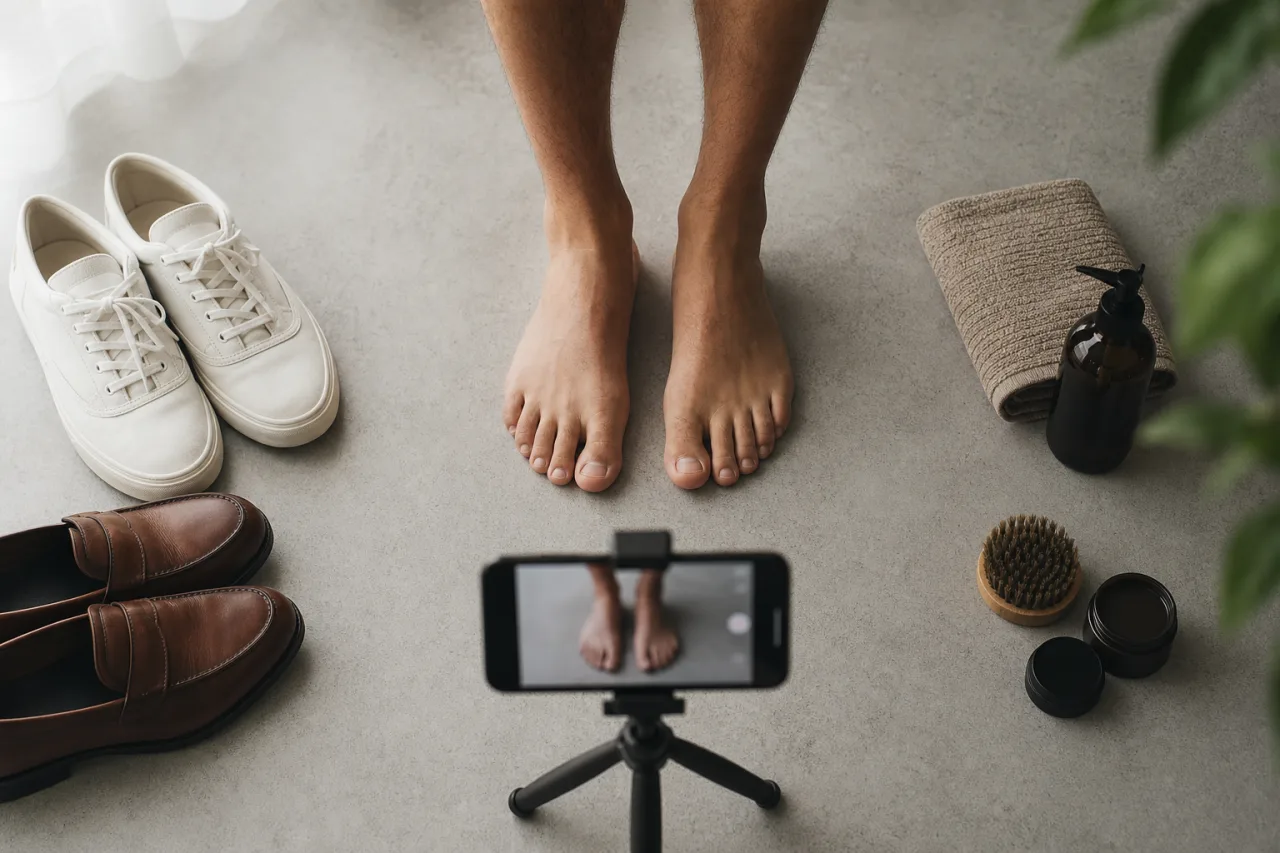
Use a plain sheet, clean floor, bath mat or neutral wall as the background. Check the entire frame for laundry, cables and random furniture. A $15–$30 phone tripod makes low angles much easier, but a stable stack of books and the phone’s 3- or 10-second timer also works.
Tap the nearest foot on the screen to set focus, then lower the exposure slightly if pale areas look blown out. Take each composition in both portrait and landscape orientation. Leave some breathing room around the toes and heels instead of cropping them accidentally.
A Simple 12-Photo Shot List
Shoot this basic set, reviewing sharpness every three or four frames:
- Both feet from above
- Both soles facing the camera
- Left-foot close-up
- Right-foot close-up
- Side profile with arches visible
- Heels from behind
- Toes pointed forward
- Toes curled naturally
- One foot crossed over the other
- Standing pose from floor level
- Socks half-on or half-off
- One wider scene-setting shot
Move the phone and your feet between shots. Digital zoom usually softens detail, so bring the tripod closer instead.
Edit Without Making the Photos Look Fake
Use your phone’s standard editor to straighten lines, crop distractions and make small adjustments to brightness, warmth and contrast. Keep skin texture, nail detail and natural shadows visible. Heavy smoothing and aggressive filters make buyers wonder what the original image looked like.
Compare edited photos side by side before exporting. Colors should match across the set, especially skin tone and background whites. Save full-resolution copies, then inspect them at 100% size to catch blur before uploading.
Price Singles, Bundles and Custom Requests
Don’t pull a price out of thin air. Start with a three-step ladder that gives curious buyers an easy entry point while protecting your time on larger orders.
- Introductory set: A small set of three to five images at your lowest price. Use an existing shoot and keep the concept simple.
- Themed bundle: Eight to 15 coordinated images with more variety in angles, footwear or setting. The per-photo price can be slightly lower, but the total should be higher.
- Custom tier: A buyer-defined concept priced above your standard bundles. Set a minimum charge before discussing details, then quote the job based on the work involved.
For example, if comparable Feetpik sellers charge around $6 for a small set and $18 to $30 for fuller bundles, a custom request shouldn’t automatically cost $20. A complicated custom may deserve $40, $60 or more. Check current listings in your niche rather than treating those figures as fixed market rates.
What Should Increase the Price?
Price the job, not just the final image count. A five-photo request that takes 45 minutes to stage can be more expensive than 12 photos pulled from a shoot you already completed.
Add more when a buyer requests special props, a specific location, multiple outfit changes, detailed poses or delivery on a tight deadline. Reshoots should also cost extra unless you missed an agreed instruction. Spell out what the original price includes before shooting.
Exclusivity carries a bigger premium because you’re giving up future sales. If a buyer wants a set that won’t be resold, charge enough to replace the likely lifetime value of that content—not another $5. Also calculate Feetpik’s current platform fees so you know what you’ll actually receive after the sale.
When Discounts Make Sense
Discounts work best when they increase order size without creating more work. You might offer three existing sets for 10% less than buying each separately, or give a returning buyer a modest bundle rate. Avoid discounting customs that require new props, travel or repeated revisions.
Review pricing after every 10 to 20 sales. Actual purchases matter; likes, profile views and enthusiastic messages don’t pay for shooting time. If bundles sell quickly, test a small increase. If they sit untouched, adjust the contents, preview or price one variable at a time.
Create Listings That Attract Buyers Without Overselling
Use Specific, Searchable Listing Language
A buyer should understand your set before opening the listing. Skip vague titles like “Hot New Pics” and name the details people actually search for: theme, footwear, setting, grooming style, image count and exclusivity.
Men’s Size 12 Barefoot Patio Set — Natural Grooming — 15 Exclusive Photos
Use the description to clarify what’s included: “15 high-resolution images featuring bare feet on a stone patio, with overhead shots, sole close-ups and relaxed side angles. Natural nails and light hair; no socks or shoes. This set will be sold only once.” If “exclusive” means something different—such as unavailable elsewhere but sold to multiple buyers—say that plainly.
Accurate descriptions prevent disappointed messages and refund disputes. Don’t promise “rugged outdoor shots” if three images show a foot beside a houseplant. Your previews should also vary: try one full-foot image, one close crop and one shot that shows the setting rather than posting three nearly identical angles.
A predictable schedule helps buyers remember you. Posting every Tuesday and Friday is more useful than uploading eight sets in one weekend and disappearing for a month. Pick a pace you can maintain, then rotate previews and themes so your profile looks active without becoming repetitive.
Turn One Sale Into Repeat Business
Professional communication doesn’t require long conversations. Reply politely, answer the actual question and avoid pressuring someone who hasn’t decided. Saved templates make this easier when several messages arrive at once.
“Thanks for asking. This set contains 15 images, and the exact footwear and angles are listed in the description. Let me know if you need one detail clarified.”
“I can consider that custom concept. Please send the requested setting, footwear, image count and deadline through Feetpik so I can confirm the scope and price.”
After delivery, a short thank-you is enough. If Feetpik offers favorite, follow or messaging tools, invite the buyer to watch for similar sets rather than repeatedly pitching them. Keep payment, order details and file delivery inside Feetpik wherever those features are supported. It gives both sides a clear record and keeps the transaction organized. Reliable descriptions, prompt delivery and calm replies are what bring good buyers back.
Protect Yourself From Scams, Privacy Leaks and Legal Problems
You must be at least 18 to sell feet pictures. You also need to own every image you list or have clear permission from the photographer and anyone else shown. If either point is uncertain, don’t upload it.
Red Flags That Should End the Conversation
Keep payment and delivery on Feetpik wherever the platform supports them. A buyer who immediately pushes PayPal, gift cards, cryptocurrency or another app isn’t offering you a shortcut; they’re removing the protections attached to the transaction.
- Fake overpayments: Someone claims they “accidentally” sent $300 instead of $30, then asks you to refund the difference. Check your actual account, not their screenshot or email.
- Chargeback stories: Don’t accept promises that a pending payment will clear after you send the files.
- Verification codes: Never share a login, password-reset or two-factor authentication code. Support staff shouldn’t ask for one.
- Suspicious links: Don’t open a buyer’s “payment confirmation,” cloud folder or verification page. Log in through the official site yourself.
- Personal questions: Your legal name, home address, workplace, phone number and daily routine aren’t relevant to an order.
Pressure is a warning too. If someone needs an answer “within five minutes,” stop replying, save screenshots and use the platform’s block or report tools.
Keep Content and Personal Life Separate
Check every frame for reflections, mail, vehicle plates, tattoos, work uniforms, house numbers and recognizable views outside a window. Photo metadata can also contain location details, so review or remove it before uploading.
Use watermarked, lower-resolution previews when appropriate, placing the mark where it can’t be cropped out cleanly. Assume any delivered image could eventually be copied, even when a buyer seems trustworthy.
Plan for Taxes and Content Ownership
Save order confirmations, payout statements, platform fees, refunds and business-related receipts. A monthly folder and simple spreadsheet are enough to avoid a miserable scramble at tax time.
Income from sales may trigger local tax reporting, self-employment registration or estimated payment obligations. Rules vary, so check your tax authority’s current guidance or ask a qualified local accountant. Keep original photo files and written model or photographer permissions as proof that you have the right to sell the content.

Common Mistakes Male Feet Pic Sellers Make
Copying a successful seller’s persona is tempting, but it usually produces a profile that feels forced. Borrow the useful structure—not the identity. Notice how they frame shots or organize sets, then build your own voice around a look and schedule you can maintain.
Another common misstep is uploading ten photos that are effectively the same image. Change the angle, distance, pose, footwear or setting so each file adds something. Before posting, view the thumbnails together. If two shots look interchangeable at that size, keep the stronger one.
Presentation problems can also undo good photography. Check the frame for laundry, stained floors, mail, reflections, tattoos, house numbers and recognizable views. A plain sheet can work, but only if it’s clean and pulled tight. Zoom into every image before uploading; identifying details often hide at the edges.
Treating Every Message as a Sale
Not every person asking questions intends to buy. Some will request extra previews, prolonged chats or “one sample first.” Use a short saved reply that states what’s included, the price and your boundaries. If the conversation keeps circling without an order, stop investing time in it.
Payment promises aren’t payment. Don’t shoot or deliver a custom because someone says they’ll pay on Friday, after payday or once they approve the images. Confirm payment through Feetpik’s supported process first, then begin work.
Customs also become unprofitable when sellers charge standard bundle prices for demanding instructions. A request involving specific props, 20 poses and multiple reshoots should cost more than an existing set. Quote for preparation, shooting and editing time, and state how many revisions—if any—the price covers.
Changing Style Before Gathering Useful Data
Beginners often post for three days, see no sales and reinvent the whole profile. That’s too little information. Keep a consistent approach for at least a few weeks, then compare views, saves, messages and purchases to identify what’s actually working.
Don’t confuse slow demand with failure, either. This isn’t immediate passive income: shooting, sorting, listing and answering buyers all take work. Set a modest posting routine, track results in a simple spreadsheet and adjust one variable at a time. Otherwise, you’ll never know if the price, theme or preview caused the change.
A Seven-Day Checklist for Starting on Feetpik
Give yourself one focused week instead of trying to launch in an evening. Each day has one job, and most can be completed in 30 to 90 minutes.
Before You Publish
- Day one: Pick your niche and boundaries. Write down one main theme, two supporting themes and anything you won’t create. Decide now how you’ll handle custom requests, recognizable clothing and outdoor locations.
- Day two: Separate your contact and security details. Create your seller email, username and unique password. Turn on two-factor authentication if available, then store recovery information somewhere private—not in a screenshot folder.
- Day three: Groom and gather props. Prepare your feet for the look you’ve chosen, clean your shooting area and inspect every prop. Shoes, socks, towels and workout gear should look intentional, not pulled from the laundry basket five minutes earlier.
- Day four: Shoot your first sets. Aim for two distinct batches of 10 to 15 usable photos. Capture wide, medium and close-up angles, plus a few vertical preview options. Check focus before dismantling the setup.
- Day five: Edit and organize. Remove weak or repetitive shots, make restrained lighting and color corrections, then export full-size files and previews. Use practical folders such as Athletic_Socks_Set_01 rather than leaving everything named IMG_4827.
- Day six: Build the storefront. Complete your profile, prepare a short pricing ladder and draft at least two listings. Read each description once as a buyer: the image count, theme and contents should be obvious.
- Day seven: Publish and inspect. View your live profile on both phone and desktop. Recheck previews for reflections, metadata concerns, location clues or accidental identifying details. Then record the launch date and starting numbers.
What to Track During the First Month
Use a basic spreadsheet and update it twice a week. Track listing views, messages, sales, revenue after fees, time spent, custom inquiries and which themes attract genuine buyers. Don’t treat compliments or vague “I’ll buy later” messages as demand.
After 30 days, compare results by listing—not just total income. A set with fewer views but two purchases may deserve a follow-up, while a popular preview with no sales may need a clearer description, different price or stronger paid images.
Is Selling Feet Pics on Feetpik Right for You?
Selling male feet pics can be a reasonable side project, but it’s not automatic income. The best fit is an adult who genuinely enjoys taking photos, can stick to firm boundaries and won’t be discouraged by an uneven month. You might receive several orders one week and none the next.
Regular posting matters too. If you’re happy to plan a shoot, select the strongest images and keep your profile active, you’re more likely to enjoy the process. If taking and organizing photos already feels like a chore, the money probably won’t make the routine appealing for long.
Give yourself a quick reality check
- You can say no without second-guessing yourself. A buyer’s offer shouldn’t override your limits, even when the requested set pays more than usual.
- You’re comfortable handling messages. Some conversations lead to sales; others involve questions, negotiation or requests you’ll decline. It’s still customer service.
- You can tolerate uncertain results. There’s no guaranteed first-sale date, monthly total or return on the hours you put in.
- You accept the limits of digital privacy. Privacy precautions reduce exposure, but a purchaser could still save, copy or repost content after receiving it.
- You’re willing to improve. Reviewing which sets sell and changing your approach is more realistic than assuming the first concept will work.
It’s probably a poor fit if you need dependable money for next month’s rent, resent answering buyer questions or would feel seriously distressed if an image appeared somewhere else online. That doesn’t mean you’re being overly cautious. It means the trade-off isn’t right for you, and that’s a perfectly sensible conclusion.
If you’re still interested, start smaller than you think. Prepare one strong set of 8 to 12 photos using what you already own, then check every frame for reflections, tattoos, mail, windows and other identifying details. Publish only when you’re comfortable with the images leaving your phone. See how the work feels before investing heavily in lights, shoes, backdrops or props.