Taking a decent foot photo can take 30 seconds. Building a foot-modeling business that protects your identity, attracts paying buyers and doesn’t eat up your evenings is much harder. Early sales are often inconsistent, competition is real, and one careless reflection, reused username or off-platform payment can create lasting problems.
This guide covers the mistakes that cost new sellers the most time, money and privacy—and the practical fixes that don’t require an expensive camera. You’ll learn how to set firm boundaries, price your work, spot scams and create a repeatable workflow on marketplaces such as Feetpik or elsewhere. One non-negotiable before we start: only adults should sell this type of content, and no higher offer is worth crossing a personal or safety limit.
Why Foot Modeling Is Harder Than It Looks
Taking a clear photo of your feet takes seconds. Turning those photos into steady income is a small online business, and that means handling far more than the camera work. You’re competing for attention, answering buyer questions, managing listings and keeping up with rules that can change without much warning.
There’s also no standard timeline for making a first sale. One new model might get an order during the first week; another may post consistently for a month and hear very little. Early sales are often uneven, so don’t treat one busy weekend as guaranteed income—or two quiet weeks as proof that you’ve failed.
Privacy deserves serious thought before anything goes online. Even on marketplaces designed to support anonymous selling, no platform can promise that uploaded content will never be copied, shared or connected to you. Only adults aged 18 or older should sell this type of content, and every seller should be comfortable with the long-term implications of publishing it.
Customer service is another hidden part of the workload. Buyers may ask about delivery times, request changes or misunderstand what a listing includes. Some conversations lead nowhere. Staying polite and organised matters, but so does recognising that your time has value.
Then there are platform requirements. A photo accepted on one site may breach another site’s content policy, and payout schedules, verification checks and commissions can affect what you actually earn. Dedicated marketplaces such as Feetpik may provide sales and messaging tools, but they’re still paid services with rules and fees—not shortcuts to automatic buyers.
Honestly, expensive cameras and elaborate studio gear rarely solve the hardest problems. A repeatable routine does more: plan a shoot, create a usable batch, publish on schedule, reply within a set window and track which listings sell. That may sound less exciting than going viral, but it’s how sellers learn what buyers respond to without spending every evening online.
Think in terms of testing over several weeks, not instant results. The first goal is to build a process you can maintain safely, then improve it using actual enquiries, sales and time spent.
Mistake #1: Starting Without Clear Personal Boundaries
The easiest time to set a limit is before a buyer is waiting for an answer. Decide what you’ll sell, where you’ll promote it and which requests you won’t entertain. Otherwise, a flattering message or unexpectedly high offer can push you into making a decision you later regret.
Write a Simple Yes, No and Maybe List
Create three lists in your notes app before publishing your first profile. Keep them specific enough that you can check a request quickly rather than renegotiating your comfort level every time.
- Yes: still photo sets, particular footwear styles, anonymous props, and messages sent through your chosen marketplace.
- No: face shots, explicit content, personalised items showing a buyer’s full name, off-platform payments, or promotion through personal social accounts.
- Maybe: short videos, unusual footwear requests, direct messages, or custom props—provided you’ve reviewed the details, price and platform rules first.
Your list can be completely different. The point is to decide whether you accept video, worn footwear requests, personalised signs or props, private messaging and alternative payment methods before someone asks. Also note where you’ll promote: perhaps one dedicated marketplace and one separate social profile, but never your personal Instagram.
Use a Standard Response for Boundary-Pushing Buyers
You don’t owe anyone a lengthy explanation. Save a short reply so you’re not trying to find the right words while someone is applying pressure.
“Thanks for asking, but I don’t offer that type of content or accept payment outside the platform. I can offer one of the options listed on my profile instead.”
If they keep pushing, end the conversation. “I need it tonight,” “I’ll pay double,” and “Everyone else does it” aren’t valid reasons to cross a limit. A higher price doesn’t remove privacy risks or make an uncomfortable request acceptable. Boundaries are working rules, not opening bids.
Mistake #2: Revealing More Personal Information Than Intended
You can keep your face out of frame and still reveal enough clues for someone to identify you. A mirror may catch your reflection, a parcel label may show an address, and a recognisable tattoo can connect modeling photos to your personal social profiles.
Run a Privacy Audit Before Posting
Review every image at full size, not just as a thumbnail. Check mirrors, windows, glossy furniture and taps for reflections. Zoom in on mail, certificates, prescription packaging, vehicle plates and anything displaying a name or location.
Home interiors can be surprisingly identifiable too. A distinctive view, family photograph, workplace uniform or unusual piece of furniture may match something you've posted elsewhere. Cover recognisable tattoos or keep them outside the frame if anonymity matters to you.
Before uploading, remove location metadata from the file. Most social networks strip some metadata, but you shouldn't assume every marketplace, messaging service or file-delivery method does. On a phone, disable location access for the camera or export a clean copy and inspect its details before sharing.
Do one final review after editing. Cropping can expose a reflection you missed, while filters may make faint writing easier to read. Honestly, the safest habit is to pause for five minutes and inspect the finished file with fresh eyes.
Keep Personal and Modeling Accounts Separate
Create a business email and a unique username that you've never used on Instagram, TikTok, gaming forums or personal accounts. Reusing a handle makes it easy to connect profiles with a basic search.
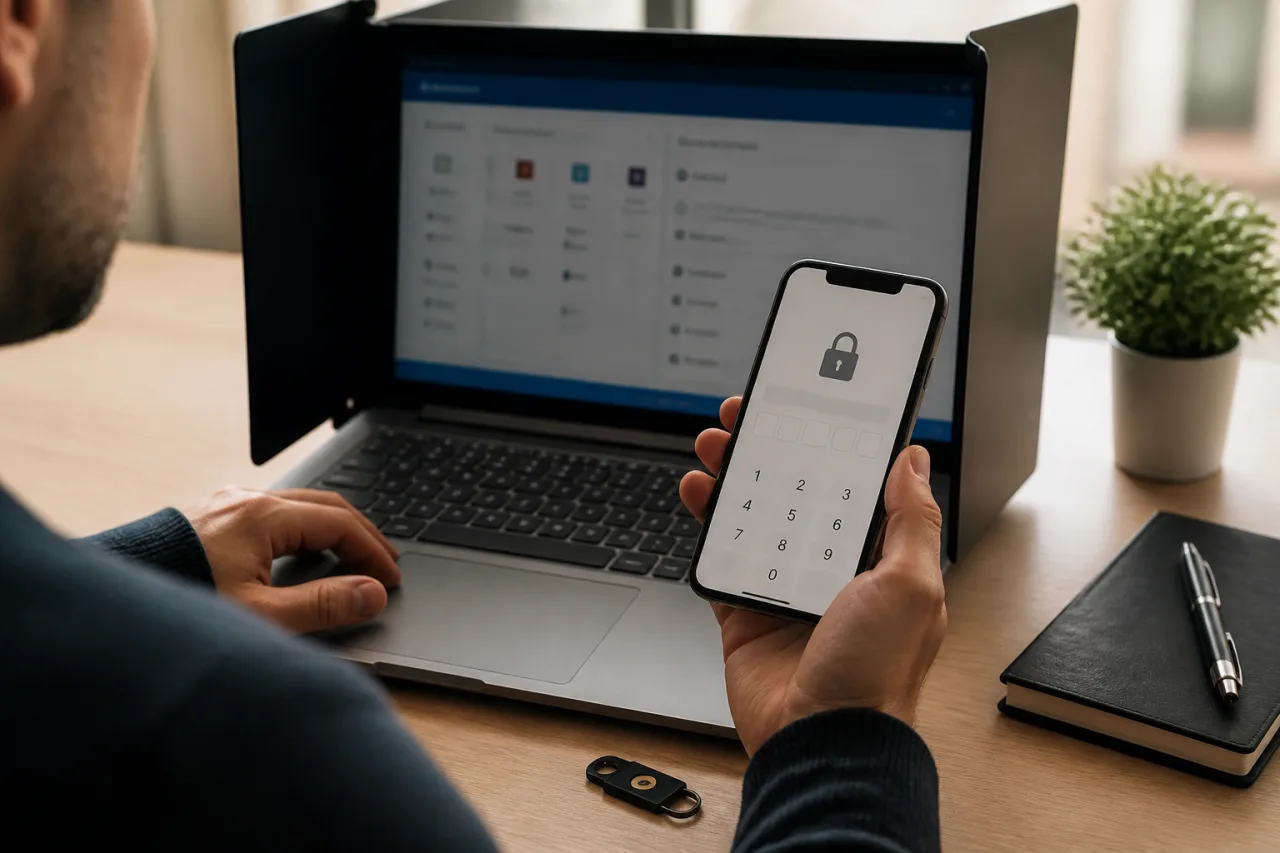
Use a different strong password for every account, preferably generated and stored by a password manager, and enable two-factor authentication. Avoid recovery questions whose answers can be found on your public profiles.
Check what buyers see when they pay. Some payment services display your legal name, email address or other account details on receipts. Review the provider's privacy settings and run a small test transaction with someone you trust before accepting customer payments.
No platform, including Feetpik, can guarantee perfect anonymity once content is online. Buyers can save files, take screenshots or repost them. Separation and careful checks reduce the risk considerably, but only upload material you could tolerate losing control of.
Mistake #3: Posting Dark, Blurry or Repetitive Photos
Buyers usually notice lighting, cleanliness, sharp focus and variety long before they wonder which camera you used. A recent iPhone, Samsung Galaxy or similar modern phone is more than capable of producing saleable images. An expensive DSLR won’t rescue a dim, cluttered shot.
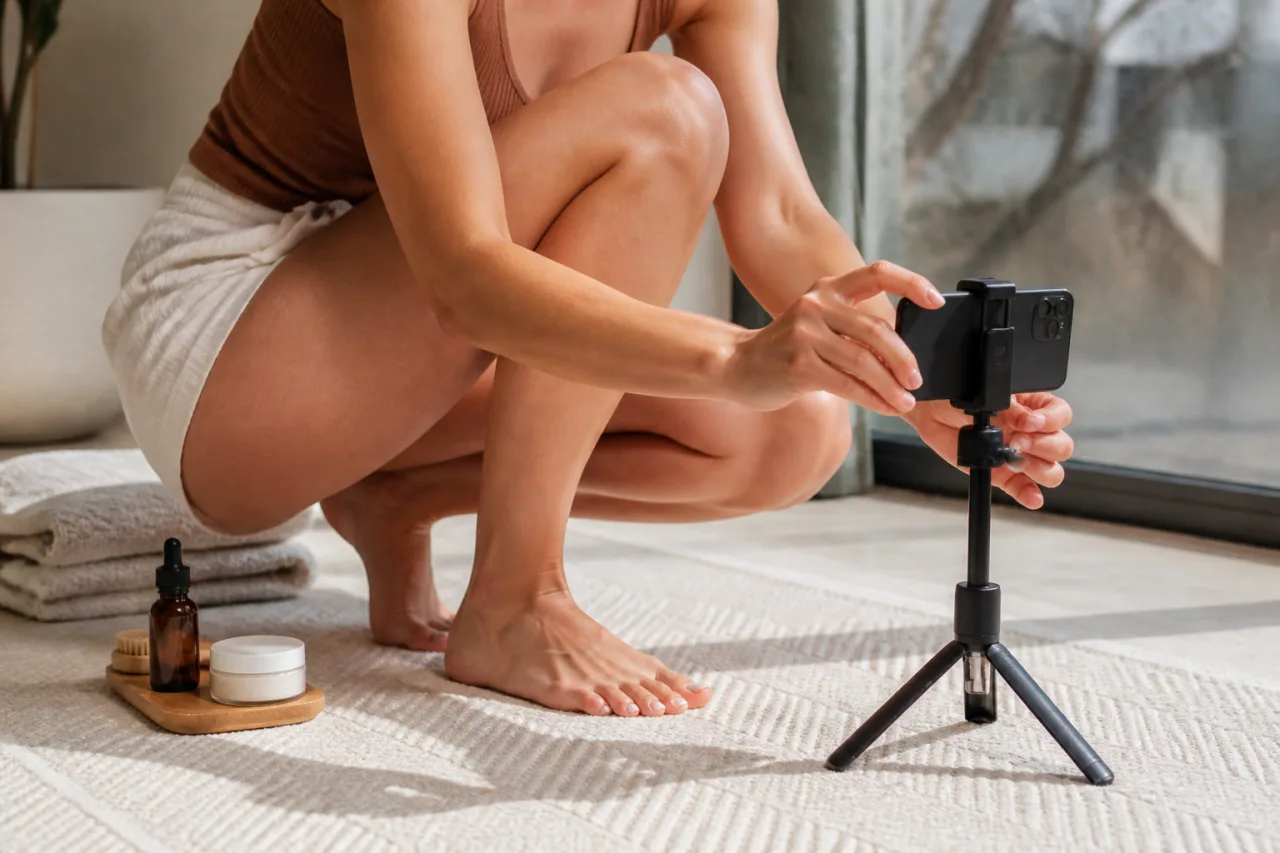
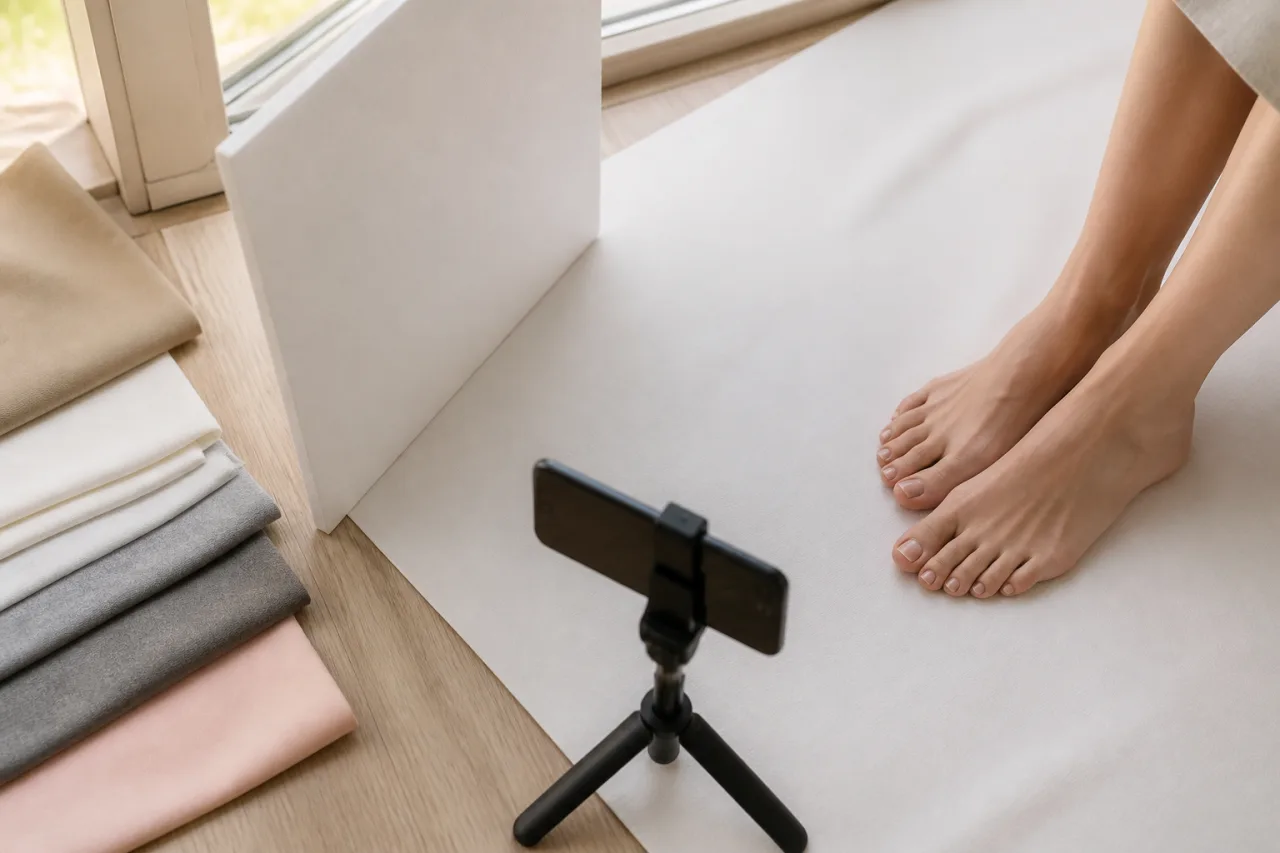
Start with a simple setup: indirect window light, a plain sheet or clean floor as the background, and a basic phone tripod. Position yourself beside the window rather than directly in front of it. Tap the screen to focus, use the rear camera when possible, and set a three- or ten-second timer to prevent movement as you press the shutter.
Turn off ceiling lights if daylight is your main source. Mixing a warm lamp with cool window light can make skin tones look patchy or oddly orange. Avoid harsh direct flash too; it creates flat highlights, deep shadows and extra emphasis on every speck of dust.
Build a Small Portfolio With Real Variety
Ten images taken from almost the same angle don’t feel like a ten-photo set. Change something meaningful between shots: the angle, pose, distance, background, lighting direction, footwear or crop. A useful starter portfolio might include a top-down view, side profile, sole shot, close-up and one wider composition.
Check the full frame before shooting. Laundry, charging cables, pet hair and half-empty drinks are surprisingly distracting. Clean the background, wipe the phone lens, and zoom in afterward to confirm that the main details are genuinely sharp—not merely “good enough” on a small screen.
Edit for Consistency, Not Artificial Perfection
Basic editing should make a set look cohesive. Adjust exposure, white balance, contrast and cropping lightly, then apply similar settings across the collection. If skin turns plastic-smooth, toenail colour changes completely or edges begin to warp, you’ve gone too far.
Overediting can also create unrealistic expectations for future sets or custom orders. Keep texture believable, compare edits against the originals, and export at a high enough resolution that details remain clear. The goal is polished, consistent work—not an image that looks generated or heavily filtered.
Mistake #4: Guessing at Prices or Undervaluing the Work
Copying another seller’s price is tempting, but you’re rarely comparing like with like. Their £10 set might contain five older images sold repeatedly, while yours includes 20 newly edited shots. They may have a large audience, charge separately for exclusivity or spend half as long producing each order.
Calculate the Real Time Behind Each Sale
Start by tracking the full job, not just the minutes spent taking photos. Include preparation, setup, shooting, selecting images, editing, uploading and buyer messages. A “quick” set can easily take 75 minutes once those small tasks are counted.
Choose an hourly rate that makes the work worthwhile, then add direct costs. For example, 80 minutes at £24 per hour equals £32 in labour. Add £3 for props or supplies, then account for platform commission, payment processing and a tax reserve based on your local obligations.
If total selling fees are 15%, don’t simply add 15% to £35; divide £35 by 0.85. That produces a minimum sale price of about £41.18 before allowing for taxes. Check whether payment costs are already included in the platform commission so you don’t count them twice.
Set Prices and Policies Before Negotiating
Different products need different pricing. Ready-made sets can cost less because they’re already finished and may be sold repeatedly. Bundles usually offer a modest per-set discount, while subscriptions reflect an ongoing delivery schedule rather than one large collection.
Custom work should cost more. It creates extra messaging, preparation and editing, and a highly specific request may have little resale value. Add clear surcharges for unusual props, rush delivery, extra revisions or exclusivity. If a buyer wants content that won’t be sold again, the price should cover the future sales you’re giving up.
Keep a simple rate sheet with your base prices, minimum custom charge, included revisions and discount limits. This prevents nervous, on-the-spot bargaining. A discount that turns a £40 job into £22 may win the sale, but it can also leave you working for less than minimum wage after fees.
Mistake #5: Choosing a Platform Without Reading the Terms
A marketplace can look appealing until you discover that its payout method isn’t available in your country, its minimum withdrawal is higher than your likely monthly sales, or its rules prohibit the content you planned to offer. Read the seller terms, privacy policy and payout information before uploading anything.
Look Beyond the Headline Fee
Compare the full setup, not just the advertised membership price. Check identity-verification requirements, permitted content, buyer traffic, privacy controls, payout methods, withdrawal thresholds and the process for handling disputes. Find out what buyers can see on your profile and what information appears on receipts or payment records.
Then calculate the total cost of getting paid. Depending on the service, that could include a subscription, sales commission, payment-processing charge, withdrawal fee or currency-conversion cost. A platform advertising a low entry price may still be expensive if several deductions come out of every sale.
Dedicated marketplaces can make discovery, order management and transactions simpler, but sellers pay for that infrastructure. Feetpik is one paid option and takes a commission on sales. FeetFinder and FunWithFeet are alternatives, but don’t rely on an old review or comparison post when choosing among them. Pricing, verification rules and payout policies change, so confirm the current details directly on each platform.
Buyer activity matters too. A cheap marketplace offers little value if it has few suitable customers, while a busy one may have heavier competition. Browse public listings where possible and assess how recently sellers and buyers appear to have been active.
Avoid Depending on One Account
Social platforms such as Reddit, Instagram and X may be usable without paying a marketplace subscription. They can help people find your work, but they generally provide less transaction protection and may restrict content, links or entire accounts with limited warning.
Don’t let one profile become your only route to buyers. Keep copies of permitted profile text, track where enquiries originate and maintain at least one backup promotion channel. Most importantly, review platform terms every few months; staying compliant last year doesn’t guarantee that your current posts still qualify.
Mistake #6: Ignoring Common Scams and Payment Red Flags
Scammers tend to reuse the same scripts because they work on sellers who are excited about a first big order. A stranger offering $500 for a few photos isn’t automatically generous—especially when the offer comes with unusual payment instructions, urgency or a demand to continue on another app.
Never Pay a Buyer to Receive Money
A legitimate buyer doesn’t need you to purchase gift cards, pay a “verification fee” or upgrade a payment account before their money can arrive. Those fees are invented. So are emails claiming a payment is locked until you send a tracking number, refund a deposit or click a verification link.
Overpayment schemes follow a similar pattern. The buyer supposedly sends $300 for a $100 order, then asks you to return the extra $200. The original payment later fails or is reversed, leaving you out the refund and the content.
Don’t open payment links sent through direct messages. Type the payment provider’s address into your browser or use its official app. Phishing pages can look convincing enough to capture your password and two-factor authentication code in under a minute.
Deliver Only After Verified Payment
A screenshot, email receipt or “pending” notification isn’t proof that you’ve been paid. Sign in to Feetpik, another marketplace or your payment account directly and confirm that the transaction appears there with the correct amount and status. Never rely on an image the buyer can edit.
Be wary of promises such as, “Send three free samples and I’ll place a $1,000 order.” A cropped, watermarked preview may help show quality, but full-resolution files should wait until payment is verified. The same applies when someone threatens a chargeback unless you provide extra images that weren’t included in the order; save the messages and report the account instead of renegotiating under pressure.
Moving the conversation to Telegram, WhatsApp or private email can also strip away useful protection. The original platform may no longer have a complete message history, moderation access or evidence for a dispute. If a platform requires orders and delivery to stay on-site, keep them there.
Mistake #7: Promoting Inconsistently—or Spamming Everywhere
Promotion works best when people see your work regularly and begin to recognise it. Posting nothing for two weeks, then dropping the same sales link into 15 unrelated groups, usually looks desperate rather than professional.
A better target is three to five strong promotional posts per week. Keep the presentation recognisable—similar lighting, cropping, tone and username—but adapt the caption and preview to the channel instead of copying everything word for word.
Choose Two Sustainable Marketing Channels
Start with two channels you can maintain without spending every evening promoting. That might be Reddit plus X, or Instagram plus a dedicated marketplace profile such as Feetpik. Each has different audiences, restrictions and tolerance for promotional content.
On Reddit, read the rules and pinned posts for every subreddit before contributing. Some communities require account age or verification; others ban watermarks, direct sales links or repeated posts. On Instagram and similar networks, check current hashtag restrictions rather than stuffing captions with tags that may be blocked or associated with prohibited content.
Don’t send aggressive direct messages to strangers who liked a post. A like isn’t permission for a sales pitch, and mass messaging can trigger reports or account limits.
Use previews that prove the collection is worth buying without giving away the entire product. One or two carefully chosen images, a cropped detail or a short contact sheet can work. Avoid previewing every angle from a ten-image paid set.
Track What Produces Enquiries and Sales
Test posting times instead of relying on generic “best time” advice. Post at lunchtime for two weeks, then try early evening for two weeks while keeping the content quality and frequency similar.
Record the date, channel, post format, enquiries and completed sales in a simple spreadsheet. Likes are pleasant, but they don’t pay. If Reddit produces six serious enquiries and two sales while another channel produces 500 views and no messages, that’s useful evidence.
Review the numbers monthly. Keep the schedule manageable, repeat formats that attract genuine buyers and stop spending hours on channels that only generate empty engagement.
Mistake #8: Treating Buyer Communication Too Casually
A casual “sure, I can do that” can become a dispute when the buyer expected 20 photos and you intended to send eight. Vague listings, replies that take several days and terms that change halfway through an order all leave room for conflicting expectations.
Every listing should state the exact number of images, file format, whether the photos are edited and the expected delivery time. “10 edited JPG images delivered within 72 hours” is far safer than “a full set delivered soon.” If delays happen, send one short update and provide a realistic new deadline.
Confirm Custom Orders in Writing
Before accepting payment, summarise the request in one message. Include the number of images or clips, requested pose or footwear, editing level, delivery date, price and revision policy. Also clarify what isn’t included. A custom order for red polish, for example, doesn’t automatically include the polish application process, extra angles or the buyer’s name written on props.
Ask the buyer to confirm that summary in writing, then keep the conversation and delivery record. On marketplaces such as Feetpik, use the platform’s messaging tools where possible so there’s evidence if either party disputes the agreement.
Do Not Confuse Attention With a Sale
Long conversations can feel promising, but compliments and repeated questions aren’t payment. Keep replies polite and brief, answer reasonable product questions, then direct the buyer to the listing or checkout. Don’t provide multiple unpaid previews, spend an hour discussing hypothetical customs or continue when someone uses guilt, flattery or urgency to push past your stated terms.
If a buyer becomes abusive or sexually harasses you beyond the agreed business interaction, stop replying. Take screenshots, save the username and order details, then use the platform’s block and report tools. Report any threats, blackmail attempts or demands for personal information to platform support, preserving the original messages rather than deleting them. If a threat appears credible or involves stalking, contact local law enforcement. You never owe an aggressive buyer another explanation.
Mistake #9: Neglecting Foot Care, File Security and Business Records
The less glamorous routines often determine how consistently you can work. A painful cuticle, missing photo set or year of untracked fees can cause far more trouble than a quiet sales week.
Protect Your Feet Instead of Chasing a Perfect Look
Keep nails trimmed with clean, disinfected tools, moisturise regularly and patch-test unfamiliar products before using them across both feet. Don’t cut calluses aggressively or apply harsh peels immediately before a shoot. Redness, burns and small cuts are difficult to hide safely—and editing them later adds work.
Poses shouldn’t hurt. Holding an extreme arch or balancing on curled toes for 20 minutes can lead to cramping and strain, so take breaks every few minutes and stop if you feel sharp pain or numbness. Allow recovery time between longer sessions. If you notice swelling, infection or persistent pain, postpone the shoot and seek appropriate medical advice rather than covering the problem with polish.
Treat files with the same care. Use neutral names such as blue-set-04.jpg, not your legal name or address. Keep separate folders for originals, edited previews and delivered sets so you don’t accidentally send an unwatermarked original. Maintain at least two backups—one encrypted cloud copy and one external drive stored securely.
Keep Records From the First Sale
A basic spreadsheet is enough to start. For every order, record the date, gross sale, marketplace commission, payment fee, refund, and net amount received. Log related expenses such as props, polish, lighting, platform charges and editing software, then save receipts in monthly folders.
Check the tax and registration rules where you live; platforms may report seller income, but that doesn’t necessarily calculate or pay everything you owe. A local accountant can clarify deductible expenses and payment deadlines.
Finally, understand what rights you’re selling. You’ll generally retain copyright unless you transfer it in writing, although platform terms may grant usage licences. If another identifiable adult appears in a photo or reflection, obtain clear written consent before publishing or selling it—and keep that consent with the project records.
The New Foot Model Pre-Publish Checklist
Use this final pass before anything goes live or leaves your control. It takes about two minutes and can prevent a privacy mistake, rejected upload or avoidable buyer dispute.
Before Uploading a Photo
- Scan for identity leaks: zoom in on reflections, tattoos, mail, screens, windows and distinctive furnishings. Check the full frame, not just your feet.
- Remove metadata: strip location and device data from the exported file, then confirm you’re uploading the cleaned copy.
- Check the image: are the feet properly lit, the intended details in focus and the colours believable? Remove background clutter and reject near-duplicate shots.
- Confirm ownership: only post files you created or have permission to sell. If another identifiable adult appears, keep their written consent.
- Review platform rules: make sure the pose, caption, tags and visible props comply with the site’s current content policy.
- Prepare the preview: crop it so it doesn’t reveal the complete paid image. Add a subtle username watermark where appropriate, without placing it over the main detail.
Before Accepting or Delivering an Order
- Match the description to the files: verify the image count, format, editing level, theme and any promised variations. Don’t describe eight photos as a “10-image set” because two are close-ups.
- Confirm the exact request: put custom details, price, revisions and delivery deadline in writing before shooting.
- Verify payment: check the official marketplace or payment account yourself. A screenshot, email receipt or “pending” message isn’t proof that funds cleared.
- Inspect the delivery: open every file, confirm the download link works and send only what the buyer purchased. Keep messages and delivery confirmation where disputes can be documented.
- Back it up: store originals, delivered files and order notes in a secure second location with restricted access.
Monthly check: review your prices against production time, test account security and two-factor authentication, read platform policy and fee updates, and calculate actual profit after commissions, payment charges, refunds and expenses. Revenue can look healthy while a time-heavy custom package quietly loses money.
Build Slowly, Protect Your Privacy and Learn From the Numbers
A sustainable foot modeling business usually looks less exciting than social media makes it seem. It’s built on clear limits, dependable delivery and realistic expectations—not posting all day, accepting every custom request or chasing buyers who promise huge payments.
Give your approach 30 days before making major changes. During that month, track the time spent shooting, editing, answering messages and promoting. Then compare those hours with completed sales and the money left after commissions, payment costs and other expenses. Revenue alone can be misleading: earning $80 from work that took 12 hours is very different from earning the same amount in three.
Look for patterns rather than one lucky sale. Which photo styles were purchased more than once? Which promotion channels sent paying customers instead of endless messages? Did ready-made sets produce a better hourly return than custom work? A simple spreadsheet is enough to show what’s actually working.
Keep the activities that lead to profitable sales and repeat customers. Reduce or stop anything that consumes time without producing revenue. That could mean dropping a promotional account that needs daily attention, discontinuing an unpopular package or limiting messages to two scheduled check-ins per day. More activity isn’t automatically more productive.
Slow growth also gives you room to protect your privacy. Once an image, username or personal detail is public, you may not be able to pull it back. It’s better to miss a week of posting than rush content online and notice a revealing detail after someone has downloaded it.
Expect quiet periods, experiments that fail and occasional changes in platform rules. None of those automatically means the business isn’t viable. Judge progress by profit, repeat purchases, manageable hours and how comfortably you can maintain your boundaries.
Finally, trust your own risk assessment. A buyer offering extra money doesn’t deserve special access, and a marketplace with unsuitable rules isn’t right simply because other sellers use it. Declining an unsafe buyer or unsuitable platform is a business decision, not a missed opportunity.