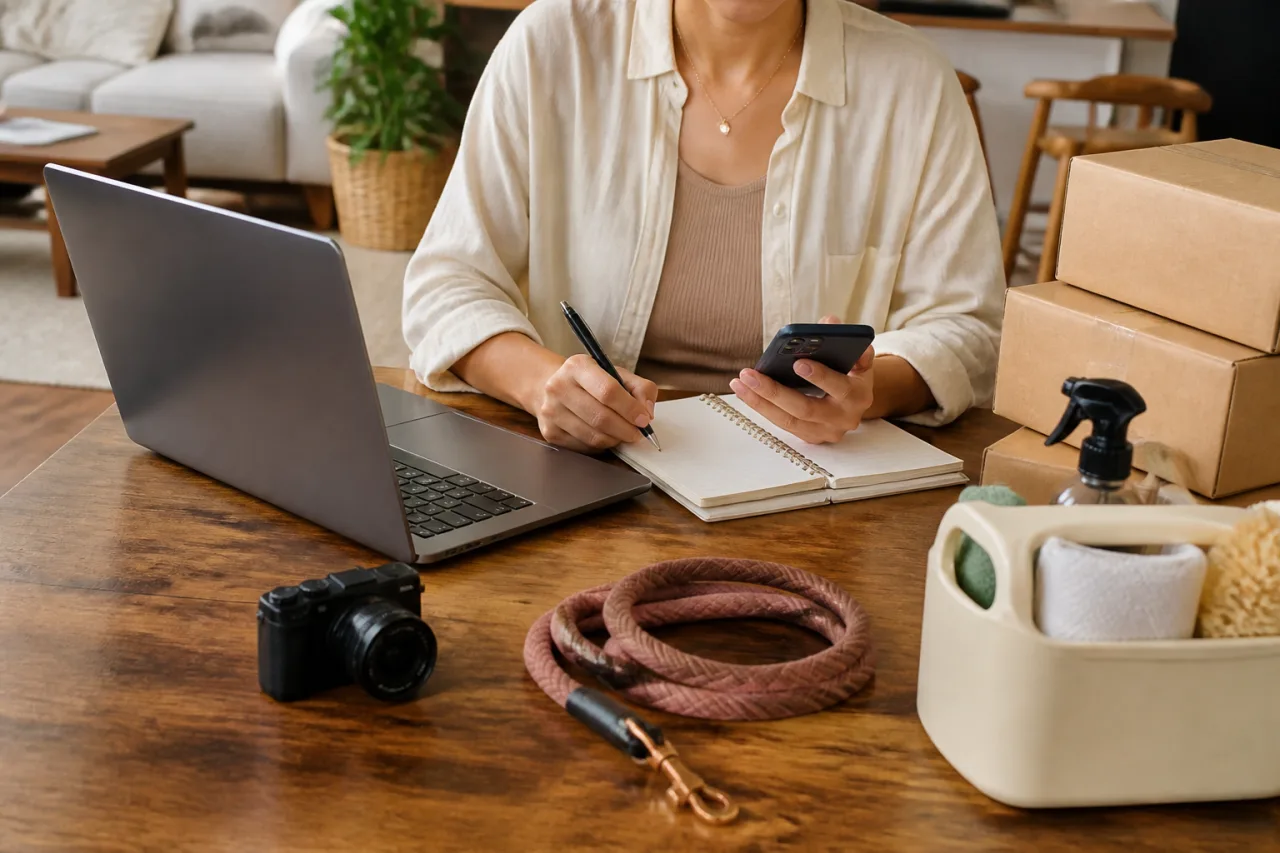
You don’t need $5,000, a garage full of inventory, or a vending machine route to earn extra money. For many side hustles, the real startup kit is a phone, a few free hours, and the nerve to ask for your first paid job. Honestly, $100 in real profit is a better first target than chasing overnight six-figure promises.
This guide covers 15 low-capital options, from local services and online freelance work to selling digital content— including feet pictures safely and anonymously through platforms like Feetpik. You’ll get realistic startup costs, practical ways to find a first customer, and the drawbacks people tend to gloss over. There’s also a simple seven-day launch plan, so you can test one idea without wasting months on branding or buying equipment nobody asked for.
You Do Not Need Thousands to Start a Side Hustle
A workable side hustle usually needs more time and consistency than cash. If you already have a smartphone, internet access, and a few spare hours each week, you have enough basic equipment to test plenty of ideas.
That doesn’t mean every business is cheap to start. Vending machines can cost $1,500 to $5,000 each before you add stock, card-reader fees, delivery, and a suitable location. An inventory-based online store may require hundreds of dollars in products and packaging before the first order arrives. Even a “small” franchise can involve five-figure fees, ongoing royalties, and contracts that are difficult to exit.
Those businesses aren’t automatically bad. They’re simply poor experiments for someone who can’t afford to lose the startup money. A side hustle should improve your finances, not leave you making monthly payments on equipment that sits unused.
Low-cost usually means selling effort, access, or a skill
The cheapest opportunities tend to avoid inventory, rented premises, and specialized machinery. You’re selling work you can perform, content you can create, or access to something you already have. Think tutoring, pet care, basic editing, photography, digital content, or simple household services.
In many cases, the first version of the business can run on tools you already own. A phone camera may be sufficient for creating and selling niche images. A laptop can handle proofreading or virtual assistance. Cleaning supplies already under the kitchen sink may be enough for one small paid job.
Look, you may eventually want better lighting, premium software, business cards, or professional equipment. But “eventually” matters. Buying upgrades before anyone has paid you is spending on a theory. Making do with basic tools for the first few jobs gives you evidence that the idea deserves more money.
Make the first target $100
Six-figure side-hustle stories get clicks, but they’re a terrible starting benchmark. Your first goal is much simpler: earn a genuine $100 from someone who isn’t a supportive friend or relative.
That amount is large enough to prove that a customer values the offer, yet small enough to feel reachable. It could mean one $100 project, two $50 bookings, five $20 sales, or ten $10 orders. Each route teaches you more than weeks spent designing logos and imagining future revenue.
Your first $100 probably won’t arrive passively. You may spend several evenings preparing an offer, posting listings, answering questions, and completing the work. The effective hourly rate could be disappointing at first. That’s normal while you’re learning, though it shouldn’t remain normal forever.
A useful early test: Can you attempt the idea with tools you own and an amount of money you’d be comfortable losing?
If the answer is yes, the downside is limited. If nobody buys, you’ve lost a little time and perhaps $20 to $50—not a rent payment. If people do buy, you can use actual earnings to improve the setup rather than funding every possible upgrade upfront.
Starting small isn’t a lack of ambition. It’s a way to separate an attractive idea from one that can produce real income. Get to $100 first. The bigger targets will make far more sense once a stranger has actually paid you.
How to Choose a Side Hustle That Fits Your Life
A good side hustle has to work on an ordinary Tuesday, not just in your most motivated week. Before buying supplies or creating accounts, compare your top three ideas against the limits you already know you have.
Start with your non-negotiables. How many hours can you reliably give each week? Do you need to work from home? Can your income vary from month to month, or do you need predictable payments? An idea that ignores these answers will become stressful fast.
- Available hours: A flexible online service may suit scattered 30-minute blocks. Cleaning, pet sitting, and event work usually require fixed appointments.
- Existing skills: Choose work you can perform competently now. Learning advanced video editing for six months isn't a low-cost shortcut if you already know bookkeeping.
- Privacy needs: Decide whether you're comfortable using your name, face, voice, or location. Some platforms allow more anonymity than local client work.
- Transportation: Include commute time, fuel, parking, and vehicle wear. No car? Favor remote work or services within walking distance.
- Local demand: Search neighborhood groups and service marketplaces. Five recent requests for dog walking mean more than a broad claim that it's “popular.”
- Income consistency: Freelance and creator earnings can swing sharply. If that would wreck your budget, prioritize recurring weekly clients or scheduled shifts.
Set a Real Startup Budget
Pick a spending cap before you shop. For a low-capital hustle, $25 to $150 is often enough to test demand. That might cover cleaning products, a basic phone tripod, listing fees, or simple packaging.
Separate required costs from upgrades. You may need liability insurance for certain local services, but you probably don't need a logo, paid website, premium lighting kit, or bulk business cards before earning anything. Use what you own when it's safe and presentable.
Also decide what you're willing to lose. If spending $100 without a sale would cause problems, your test budget isn't $100. It's closer to $20.
Compare Time to First Dollar
Some hustles can pay within days; others need a catalog, reviews, or an audience. Local yard cleanup might produce $60 this weekend, while selling digital photos or templates could take several weeks to gain traction.
Match that delay to your situation. If you need grocery money soon, choose an offer you can pitch directly to buyers. If you can tolerate a slower start, reusable digital content may offer more flexibility later. Be honest about selling time too: posting listings, answering messages, and following up all count as work.
Calculate Net Pay, Not Headline Revenue
A $100 booking isn't $100 in your pocket. Subtract platform fees, payment processing, supplies, mileage, shipping, and any paid promotion. Then divide what remains by every hour spent finding, preparing for, and completing the job.
Suppose a delivery shift brings in $85 over four hours. After $18 in fuel and an estimated $7 for vehicle wear, that's $60, or $15 per hour before taxes. A $45 remote task completed in two hours may actually pay better.
Run this rough calculation using conservative numbers. If an idea only looks attractive when every week is fully booked and nothing goes wrong, it probably doesn't fit your life yet.
Low-Cost Local Services That Can Pay Quickly
Local service work has one big advantage: people already need the job done. You’re not trying to invent demand. A clear offer posted in a neighborhood Facebook group, Nextdoor, or a local marketplace can turn into paid work within days.
1. Pet Sitting and Dog Walking
Startup cost: roughly $10 to $75. You may only need waste bags, treats, a spare leash, and basic liability coverage. Owners usually provide food, medication, and pet-specific equipment.
Dog walks commonly run $15 to $30 for 30 minutes, while drop-in visits may cost $20 to $35. Rates depend on location, visit length, the number of animals, medication needs, and high-demand dates. Overnight stays command more, but they also disrupt your routine.
For a first customer, offer three discounted walks to one nearby owner in exchange for an honest review and permission to use a pet photo in your listing. Ask friends to share your availability with their own dog-owning neighbors.
Main drawback: animals can be unpredictable. You’ll also need to work around feeding schedules, bad weather, and weekends when other people are relaxing.
2. Home Cleaning and Organizing
Startup cost: about $25 to $120. Begin with a small cleaning kit rather than buying specialized machines. Some clients are happy for you to use their vacuum and preferred products, especially if allergies are involved.
Basic cleaning often brings $25 to $50 per hour, with pricing affected by home size, bathrooms, pets, clutter, and extras such as ovens or refrigerators. Organizing may command $35 to $75 per hour when the job involves sorting and creating practical storage systems.
Land a first booking by offering one specific package—such as a two-hour kitchen and bathroom reset—to neighbors or busy parents. A defined service feels easier to buy than an open-ended “I clean houses” post.
Main drawback: it’s physically tiring, and clients can have wildly different definitions of “clean.” Confirm what’s included before arriving.
3. Yard Work and Seasonal Chores
Startup cost: $15 to $150 if you stick to hand tools or use the homeowner’s mower. Raking leaves, pulling weeds, shoveling snow, clearing gutters from ground level, and hauling branches all have seasonal demand.
Small jobs may pay $30 to $60, while larger cleanups are priced by yard size, debris volume, equipment needed, and disposal costs. Don’t quote a leaf-covered half-acre from one flattering photo.
Your fastest route to a customer is a simple before-and-after offer posted locally: “Front-yard weed removal, three openings Saturday.” You can also knock on the doors of immediate neighbors after completing a visible job.
Main drawback: weather controls your schedule, and tool, fuel, or disposal expenses can eat into a careless quote.
4. Errand Running and Household Help
Startup cost: around $0 to $60, assuming you already have suitable transportation. Services can include grocery pickup, returns, post-office runs, waiting for repair workers, light meal prep, or helping an older neighbor with routine household tasks.
Typical rates range from $20 to $40 per hour, plus mileage or parking. Distance, lifting requirements, wait time, and same-day requests should affect the price.
Start with people who already have a reason to trust you. Tell neighbors, relatives, and community-group members exactly when you’re available—for example, Tuesday and Thursday afternoons—and name the errands you’ll accept.
Main drawback: scattered requests create unpaid driving time. Set a service radius and minimum booking so a $20 errand doesn’t consume two hours.
Online Side Hustles Built Around Skills You Already Have
For most remote service work, the basic setup is simple: a reliable computer, steady internet, and an offer people can understand in ten seconds. “I can help with anything” sounds flexible, but it’s hard to hire. A narrow promise, backed by two or three relevant samples, is usually far more convincing.
5. Virtual Assistant Work
Virtual assistants handle tasks business owners keep postponing: inbox sorting, calendar management, customer replies, spreadsheet updates, research, or uploading products to an online store. You don’t need to offer all of them. “I organize email and scheduling for independent consultants” is a much stronger pitch than “I do admin work.”
Entry-level rates often sit around $18 to $30 per hour, with higher rates for bookkeeping software, project management, or ecommerce support. Create sample work using fictional information—a cleaned-up inbox system, a weekly calendar, and a tidy tracking sheet—then approach small businesses that clearly need that exact help. The downside is availability: some clients expect quick daytime responses, even when they’ve only booked a few hours.
6. Freelance Writing, Design, or Video Editing
Creative freelancing works best when the deliverable is specific. Try “four 800-word blog posts for local law firms,” “five Pinterest graphics,” or “three short-form videos edited from client footage.” Clear packages make pricing easier and stop every inquiry from turning into a custom negotiation.
Your first portfolio doesn’t need paid client work. Make two or three realistic samples for the type of customer you want, not a random collection of school projects. A beginner might charge $75 to $150 for a short article, $25 to $60 per simple social graphic, or $50 to $150 for an edited vertical video. Revisions can quietly destroy your hourly rate, so state how many rounds are included before starting.
7. Online Tutoring or Conversation Practice
If you’re strong in algebra, chemistry, essay writing, music theory, or another teachable subject, online tutoring can start with free video-call software and digital worksheets. Rates commonly range from $20 to $50 per hour, depending on the subject, student level, and your experience.
Language conversation practice is another option, particularly for fluent speakers who can correct pronunciation and keep a discussion moving. Offer a focused session such as “30-minute English interview practice” rather than general conversation. Schools, parent groups, alumni networks, and tutoring platforms can produce early bookings, though cancellations and evening schedules are common headaches.
8. Website Testing and Paid Research Studies
Website-testing platforms pay users to complete tasks while speaking their thoughts aloud. A typical test might pay $5 to $15 for 10 to 25 minutes, while live interviews and specialist research sessions can pay $30 to $150 or more.
This is better treated as occasional extra income than dependable freelance work. You’ll be screened out of many studies, and opportunities vary by location, occupation, devices, and demographics. Complete profiles accurately, follow instructions closely, and respond quickly when invitations arrive. You’re being paid for honest reactions—not for telling researchers what you think they want to hear.
Make Money From Photos, Videos, and Digital Content
A decent smartphone, natural light, and free editing apps are enough to test these ideas. The trade-off is time: content businesses rarely pay after one upload. You’ll need either paying clients, a growing catalog, or both.
9. Sell Feet Pictures Anonymously
Feet pictures are a low-cost option because you don’t need to show your face or reveal personal details. Platforms such as Feetpik provide a dedicated place to list content, communicate with buyers, and receive payment without moving conversations onto personal accounts.
Start with 15 to 25 varied photos rather than posting three nearly identical shots. Buyers may look for polished nails, bare soles, footwear themes, outdoor settings, or custom poses. A window, plain backdrop, and careful framing can do more than an expensive camera.
Privacy still takes work. Remove location data from files, hide identifying tattoos or backgrounds, use a separate creator name, and don’t reuse profile photos from your personal social media. Competition is real, so expect to spend several weeks testing prices and themes before finding what sells.
10. Create User-Generated Content for Brands
User-generated content, or UGC, is client work. A company pays you to film a product demonstration, testimonial-style clip, unboxing, or short vertical ad. You usually don’t need a large following because the brand may publish the video on its own account or use it in paid ads.
Create three sample videos using products already in your home, then pitch small brands with a specific idea. Beginners often charge around $75 to $200 per basic video, with extra fees for raw footage, multiple hooks, revisions, or advertising usage rights.
Read the brief carefully. One “quick video” can become hours of reshooting if the deliverables aren’t defined. Also decide in advance if you’re comfortable showing your face, voice, home, or family members; UGC can be faceless, but the concept needs to suit that boundary.
11. License Stock Photos and Short Video Clips
Stock marketplaces pay royalties when someone licenses your files. This is platform revenue, not a guaranteed fee for your shooting time, and individual downloads may pay very little.
Useful, ordinary footage often beats artistic sunsets: hands typing, meal preparation, package delivery, home working, or ten-second vertical clips with room for text. Avoid visible logos, copyrighted artwork, private property issues, and recognizable people unless you have the required releases.
Honestly, a catalog of 20 files probably won’t move the needle. Treat the first 100 to 300 approved uploads as research, track which subjects sell, and create more of those.
12. Sell Templates and Simple Digital Downloads
Templates are reusable digital assets: make the file once, then sell copies through a marketplace or storefront. Practical products include budget sheets, cleaning schedules, content calendars, invoice templates, printable checklists, and editable social media layouts.
Pick one audience and one problem. “Weekly booking tracker for mobile dog groomers” is easier to find and evaluate than “business planner.” Free tools can handle the first version, but test every link, formula, page size, and instruction before listing it.
Plan on creating 10 to 30 focused products before judging demand. Search results are crowded, and customer questions, listing updates, platform fees, and copycat products mean this income isn’t completely passive.
Earn From Things You Already Own
Your garage, driveway, spare cupboard, or daily-use vehicle may already contain a workable side hustle. That removes the temptation to spend $500 on stock before making a sale, but it doesn’t make the income free. Depreciation, repairs, insurance, platform fees, and the occasional damaged item all belong in the math.
13. Resell Unused or Underpriced Items
Start with things you genuinely don’t use: old phones, small appliances, tools, branded clothing, furniture, collectibles, and unopened gifts. Search completed listings on eBay rather than copying optimistic asking prices. On local marketplaces, compare similar items within driving distance and price yours about 10% above the minimum you’ll accept.
Presentation matters more than people think. Clean the item, photograph it in daylight, include model numbers and measurements, and disclose scratches before a buyer spots them. A tested coffee machine with eight clear photos will usually beat a dusty one described as “works fine.”
Look for value hidden inside your own poorly sorted possessions, too. A mixed box of cables may contain a $30 Apple adapter; an old game bundle might sell for more when the desirable titles are listed separately. Don’t start buying supposed bargains until your existing items have sold and you understand postage, returns, seller fees, and fraud risk.
Track net profit, not the sale price. A $45 sale can shrink quickly after a 13% marketplace fee, $9 shipping label, packaging, and an hour spent photographing and messaging. Local pickup keeps more of the money, although it brings no-shows and awkward haggling.
14. Rent Out Equipment, Storage, or Parking
Items that sit idle most weeks can produce occasional income: carpet cleaners, power tools, camping equipment, trailers, cameras, roof boxes, and party supplies. Spare garage space, a dry basement corner, or a parking spot near a station, hospital, stadium, or airport may be easier to rent because there’s less handover work.
Check local demand before listing. Search rental platforms and community groups for comparable prices, then calculate how many bookings would cover one repair or replacement. If a $400 pressure washer earns $25 per rental, one damaged hose and two hours arranging pickups can wipe out several bookings.
Use dated photos, written condition notes, clear return times, and whatever deposit or identity checks the platform permits. Read the insurance terms closely; ordinary homeowners or renters coverage may exclude commercial use. Also confirm lease, HOA, lender, and local parking rules before letting strangers store property or vehicles at your address.
15. Delivery Work Using an Existing Vehicle or Bicycle
Food, grocery, and parcel delivery can work if you already own suitable transportation and can log in during busy periods. Friday evenings and bad-weather meal times often pay better than a quiet Tuesday afternoon. A bicycle or e-bike can be particularly effective in dense areas where parking is slow and expensive.
Don’t judge a shift by the app’s earnings screen. Subtract fuel, tolls, extra insurance, parking, maintenance, and vehicle depreciation, then divide what remains by all hours worked, including waiting time. Earning $72 across four hours sounds decent; after $14 of fuel and an $8 maintenance allowance, it’s $12.50 an hour before tax.
Platform rules also vary on vehicle age, background checks, insulated bags, acceptance rates, and commercial insurance. Test two or three short peak-time shifts before committing. If the net hourly figure is weak, stop—putting more miles on an expensive car rarely fixes bad delivery economics.
A Seven-Day Plan to Launch Your First Side Hustle
For this sprint, pick one offer and stick with it for seven days. Don’t launch dog walking, proofreading, and digital photo sales at the same time. Splitting your attention makes it hard to tell whether an idea lacks demand or simply didn’t get a fair test.
Block out 30 to 60 minutes daily. The goal isn’t a polished business. It’s a simple offer, a real customer, and enough numbers to decide what to do next.
Days 1–2: Pick and Validate One Offer
Day 1: Choose one specific service or product you can deliver this week. “I’ll edit a 500-word blog post” is stronger than “I do freelance writing.” “Five themed feet photos delivered through a creator platform” is clearer than “I sell content.” Write down the buyer, deliverable, turnaround time, and price.
Set a spending cap before opening your wallet. For a low-capital test, $0 to $50 is usually enough. Use tools you already own, and don’t count expected earnings as permission to buy equipment.
Day 2: Look for evidence that people already pay for the offer. Spend 20 minutes checking local groups, platform listings, job posts, or creator marketplaces. Note common prices, how sellers describe their work, and what buyers repeatedly request.
Then verify demand directly. Ask three suitable people if the offer would solve a real problem, or send five short messages to likely buyers. Don’t ask, “Do you like my idea?” Ask, “Would a $25 next-day proofreading service be useful to you this month?” Specific questions produce more honest answers.
Days 3–4: Build the Minimum Setup
Day 3: Create one basic profile or listing. Include a plain-language headline, exactly what the customer receives, your starting price, delivery time, and any firm boundaries. Skip the logo design session. A clear phone photo and a typo-free description are enough for this test.
Day 4: Prepare two or three samples that closely match the paid offer. A cleaner might photograph one neatly organized cupboard. A video editor could make a 20-second before-and-after clip. A photo creator might assemble a small themed preview while keeping identifying details out of frame.
Keep samples quick. Give yourself 45 minutes, then stop improving them. Their job is to show competence, not represent every service you may eventually offer.
Days 5–7: Find and Serve the First Customer
Day 5: Contact 10 potential customers individually or publish the listing in two relevant places. Mention the result, price, and available slot: “I have one opening Thursday for a $30 résumé review delivered within 24 hours.” Avoid mass messages that sound copied.
Day 6: Follow up once with anyone who showed interest. If someone agrees, confirm the deliverable, deadline, price, and revision limit in writing. Complete the smallest sensible paid job rather than offering a large project at a steep discount just to secure a yes.
Day 7: Review the numbers. Record money received, platform fees, supplies, travel, and total hours—including outreach. Divide net earnings by hours worked. Also count replies, serious inquiries, and repeat-interest signals.
If nobody bought, adjust one variable: the audience, offer, price, or wording. Don’t abandon the idea and launch four replacements overnight. Give the revised version another focused test.

Protect Your Privacy, Money, and Time
Set up a separate email address for side-hustle accounts, customer messages, and receipts. If a service requires a phone number, consider a reputable secondary-number app rather than publishing your personal number. This keeps late-night inquiries out of your private inbox and makes recordkeeping much easier.
Use a unique password for every platform and store them in a password manager. Turn on two-factor authentication, preferably through an authenticator app. One reused password can expose your email, payment accounts, customer conversations, and personal files at once.
Use Clear Boundaries and Written Terms
Before starting a job, put the scope in writing. A simple message can confirm what you'll deliver, the price, the deadline, the number of revisions, and what counts as extra work. For example: “$75 includes a 500-word article and one revision. Additional revisions are $20 each.”
For custom work or local services with material costs, request a deposit when appropriate. A 25% to 50% deposit is common for larger projects. Small marketplace jobs may be better handled through the platform's escrow or booking system, especially when you're working with someone for the first time.
Keep payments and conversations on the platform whenever possible. Moving off-platform can remove payment protection, dispute records, moderation tools, and privacy features. Never accept overpayments that you're expected to “refund,” and don't pay a fee to release money you've supposedly earned.
Creators selling personal images should be particularly careful. Avoid showing faces, mail, house numbers, distinctive tattoos, reflections, location tags, or recognizable interiors unless that's a deliberate choice. Remove photo metadata, use a neutral background, add watermarks to previews, and don't share personal social accounts or agree to private meetings. On Feetpik, keep contact and transactions within the platform so your personal details stay separate.
Keep Basic Financial Records From Day One
You don't need complicated accounting software for your first $100. A spreadsheet with the date, customer or platform, gross payment, fees, mileage, supplies, and net profit is enough. Save digital copies of receipts in folders labeled by month instead of trying to reconstruct everything at tax time.
Track costs that are easy to overlook: payment processing fees, platform commissions, postage, parking, props, software subscriptions, and supplies used for paid work. Revenue isn't the same as profit, and taxes are generally based on the money left after legitimate business expenses.
Move part of every payment into a separate savings account. A basic starting reserve is 20% to 30% of net profit, though your actual obligation depends on your location, total income, and tax situation. Check local rules or ask a qualified tax professional once earnings become regular.
Know the Most Common Scam Signals
Be suspicious when a stranger offers far more than your listed price, rushes you to another messaging app, or sends an unexpected check. Other warning signs include requests for gift cards, cryptocurrency “verification,” login codes, remote access to your device, or upfront payments for training and equipment.
- Don't click payment links sent by customers; open the official app or website yourself.
- Don't send finished files before the agreed payment milestone.
- Don't share one-time security codes, even with someone claiming to be support.
- Don't let urgency override your stated prices, hours, or safety boundaries.
If something feels wrong, pause and verify it through the platform's official support channel. Losing one questionable order is cheaper than losing your account, identity, or an entire weekend of unpaid work.
Mistakes That Make Cheap Side Hustles Expensive
Buying Before You Have a Customer
A $900 camera doesn’t create demand. Neither does a carpet cleaner, premium design software, or a six-month supply of packaging. Use the phone, laptop, cleaning supplies, or basic tools you already own until a paying customer proves that an upgrade would improve the work.
Set a firm test budget—say, $50—and don’t exceed it before your first sale. Renting or borrowing specialized equipment for an early job is often smarter than owning something that may sit in a closet after two weeks.
Branding can become another expensive hiding place. A simple profile, three good samples, and 20 direct offers will teach you more than months spent polishing a logo, website, and color palette. Don’t pad a portfolio by copying photos, templates, captions, music, or designs you found online; protected content can trigger takedowns, account bans, or legal claims.
Confusing Revenue With Profit
If a customer pays $80, you didn’t necessarily make $80. Subtract platform commissions, payment-processing fees, supplies, mileage, shipping, refunds, and the portion reserved for taxes. A job that takes three hours and leaves $36 in actual profit pays just $12 an hour.
Underpricing to win every job makes those numbers worse. Cheap rates often attract demanding buyers while leaving no room for revisions or unexpected costs. Price from the time and expense involved, not from the fear that someone else will charge less.
Don’t let one marketplace control your entire income, either. Platforms can change fees, reduce visibility, suspend accounts, or disappear. Follow their rules, but gradually build another legitimate source of demand—such as referrals, a second marketplace, or a simple email list of consenting past customers.
Letting Customers Expand the Job for Free
A “quick extra” is rarely quick when it happens five times. One social media graphic becomes three sizes and two revisions. A 30-minute dog walk turns into feeding, medication, and waiting for a late owner.
State exactly what the price includes before starting: deliverables, duration, revision limit, deadline, and any extras. When the request changes, reply with a revised price: “I can add that for $20 and deliver it tomorrow.” That’s professional, not difficult.
This matters for digital creators too. Custom angles, outfits, props, exclusivity, or rush delivery are separate work, not favors automatically included with one purchase.
Ignoring Burnout and Personal Safety
Not every paid request is worth accepting. Decline jobs involving unsafe locations, unverified buyers, prohibited content, private meetings you didn’t agree to, or pressure to move payments and conversations off a trusted platform. No $40 order is worth exposing your identity, financial details, or physical safety.
Watch the workload as closely as the money. If you’re answering messages at 1 a.m., driving across town for tiny jobs, or dreading every order, your offer needs firmer hours, a smaller service area, higher minimums, or fewer custom requests.
Set boundaries while the hustle is small. They become much harder to introduce after customers have learned that you’re always available and every exception is free.
Low-Capital Side Hustle Checklist
Before committing to one idea, put your top three options through the same checklist. Label them Option A, Option B, and Option C, then answer each question with a number or a short sentence. Don’t let “this sounds fun” substitute for evidence.
Compare the Numbers and Trade-Offs
-
Startup spend: What must you pay before earning anything? Include supplies, platform fees, transport, insurance, packaging, and software. Set a hard cap—perhaps $50 or $100—and reject any option that requires you to “invest a little more” before testing demand.
-
Weekly hours: How many hours can you reliably give it, including customer messages and admin? Write down the actual schedule, such as Tuesday and Thursday from 7 p.m. to 9 p.m., rather than an optimistic “10 hours somewhere.”
-
Time to first payment: Estimate the number of days between posting your offer and receiving usable funds. Account for approval periods, client payment terms, platform holds, and withdrawal delays.
-
Expected net hourly rate: Subtract fees, materials, fuel, shipping, and other job-specific expenses from revenue. Then divide what remains by all hours worked. A $60 job that takes three hours plus $12 in costs pays $16 per hour, not $20.
-
Demand evidence: Record what proves people buy this service or product. Good evidence includes five recent local requests, active listings with reviews, three direct inquiries, or one paying test customer. Competitors merely existing isn’t enough; check whether they’re getting current sales.
-
Privacy level: Rate exposure from 1 to 5. Note whether customers can see your legal name, face, home address, phone number, location, or personal social accounts. For image-based work, also consider recognizable backgrounds, tattoos, reflections, and embedded location data.
-
Physical demands: List lifting, driving, standing, repetitive movements, outdoor work, and late hours. Be honest about what you can sustain after your regular workday—not just what you can tolerate once.
-
Legal considerations: Check age requirements, licenses, permits, insurance, lease restrictions, local rules, copyright ownership, and platform terms. Mark any unresolved issue as a red flag, not a task to figure out after accepting payment.
-
Repeat-customer potential: Estimate how often one satisfied buyer might return. Weekly cleaning, monthly editing, and themed photo bundles have more repeat potential than one-off furniture assembly. Also note how naturally referrals could happen.
-
Thirty-day decision date: Write the exact date now. If you launch on August 3, review the hustle on September 2. A vague promise to “give it a while” can quietly become six unpaid months.
Make the 30-Day Call
On your review date, compare planned numbers with actual results: money spent, inquiries received, paid orders, total hours, net profit, and repeat interest. Then choose one action:
- Continue if you’ve been paid, the net hourly rate is acceptable, and demand is repeatable.
- Adjust if people showed interest but pricing, presentation, timing, or the offer blocked sales. Change one major variable and set another 14-day review.
- Stop if there were no credible inquiries, costs exceeded your cap, boundaries felt uncomfortable, or the work paid too little after expenses.
Privacy and legal concerns are automatic deal-breakers, regardless of the income estimate. Among the remaining choices, favor the option with verified demand and a realistic path to payment—not the biggest advertised earning claim.
Start Small, Get Paid, Then Improve
The best side hustle isn’t the one with the loudest income claim. It’s the one you can start with what you already have, run within your boundaries, and continue long enough to find paying customers.
Pick one idea from this list. Give it a fair 30-day test instead of bouncing between dog walking, freelance editing, reselling, and content creation every few days. Switching constantly feels productive, but it prevents you from learning what customers actually respond to.
Set a firm spending limit
Decide how much you’re willing to risk before earning anything. That might be $25 for basic supplies, $50 for a simple setup, or nothing beyond tools you already own. Write down the number and don’t quietly raise it because a creator online says you need better equipment.
Your first version can be plain. A smartphone camera, natural window light, and a tidy background may be enough to test photo sales. A borrowed lawn mower may be enough to book one yard. A two-page portfolio can be enough to pitch an editing client. Customers care more about the result than your startup shopping list.
Get one real payment
Compliments and profile views aren’t proof of demand. Neither are friends saying they’d “totally buy” someday. Proof is a customer paying an agreed price for a clearly defined product or service.
That first payment may be only $20 or $40. It still answers important questions: Was the offer easy to understand? How long did the work take? Did the customer ask for changes? Would you accept the same job again at that price?
Don’t dismiss a small sale, but don’t romanticize it either. One order proves that one person was willing to pay. A pattern of orders proves you may have something worth developing.
Track what you actually kept
Revenue isn’t take-home pay. If you earned $80 but spent $18 on supplies, $12 on fuel, and $6 on platform fees, your net profit was $44. If the entire job took four hours, you earned $11 per hour before taxes.
Track those numbers from the first sale. Include preparation, messaging, travel, revisions, packaging, and cleanup time—not just the minutes spent doing the visible work. Honest records will tell you when to raise your price, simplify the offer, or walk away.
Reinvest after customers give you a reason
Upgrade only when a purchase solves a demonstrated problem. Buy stronger lighting because customers consistently prefer brighter images, not because an expensive kit looks professional. Pay for scheduling software after manual bookings become difficult, not before your first appointment.
A useful rule is to reinvest a portion of profit rather than fresh money from your regular paycheck. Even setting aside 20% to 30% creates room for gradual improvements without turning a low-capital experiment into debt.
Finally, respect your limits. A hustle that requires public promotion won’t suit everyone. Neither will one involving strangers in your home, late-night messages, heavy lifting, or personal images. Choose the option that fits your available time, possessions, skills, privacy preferences, and energy.
Start with the workable version. Get paid. Check the numbers. Then improve what customers have shown they value. That sequence is slower than chasing a viral success story, but honestly, it’s far more likely to leave you with a side hustle that pays instead of an expensive pile of unused gear.